Cold Chamber in the Hotel: The Buying Checklist for Wellness Directors and General Managers
Premium hotels are under pressure in 2026. The global wellness market reached a volume of $6.8 trillion in 2024. [1] The spa sector grew by 14.6 percent from 2023 to 2024, wellness tourism by 13.8 percent. [1] Cold chambers are a central part of this development – as a building block of the longevity offering in resort spas, city hotels and wellness destinations.
However, buying a cold chamber is an investment decision with factors that go beyond the purchase price. This checklist guides wellness directors, general managers and buyers through all the points that should be clarified before investing.
Step 1: Clarify strategic positioning
Before comparing technical data, answer the strategic question:
- Which wellness concept does the hotel pursue? A classic wellness hotel needs different applications than a longevity resort or a sports lodge.
- Which clientele should the cold chamber address? Vitality-focused older guests, performance travellers, biohackers, families or business travellers?
- Will the cold chamber be marketed as a stand-alone offering or as a module in packages? Both models work but need different price architectures.
- How does the device fit into the guest’s spa experience? Before the sauna, after the workout or as the finish of a sequence?
Answering these questions before selecting equipment leads to a more targeted purchase and avoids mis-investing in a technology that does not fit the brand.
Step 2: Technology decision – electric or nitrogen-based?
The technology question has consequences for operation, safety and experience:
- Nitrogen systems (LN2): lower purchase costs, but ongoing consumption costs for liquid nitrogen, special storage and ventilation required, usually without cold exposure of the head (no true whole-body principle).
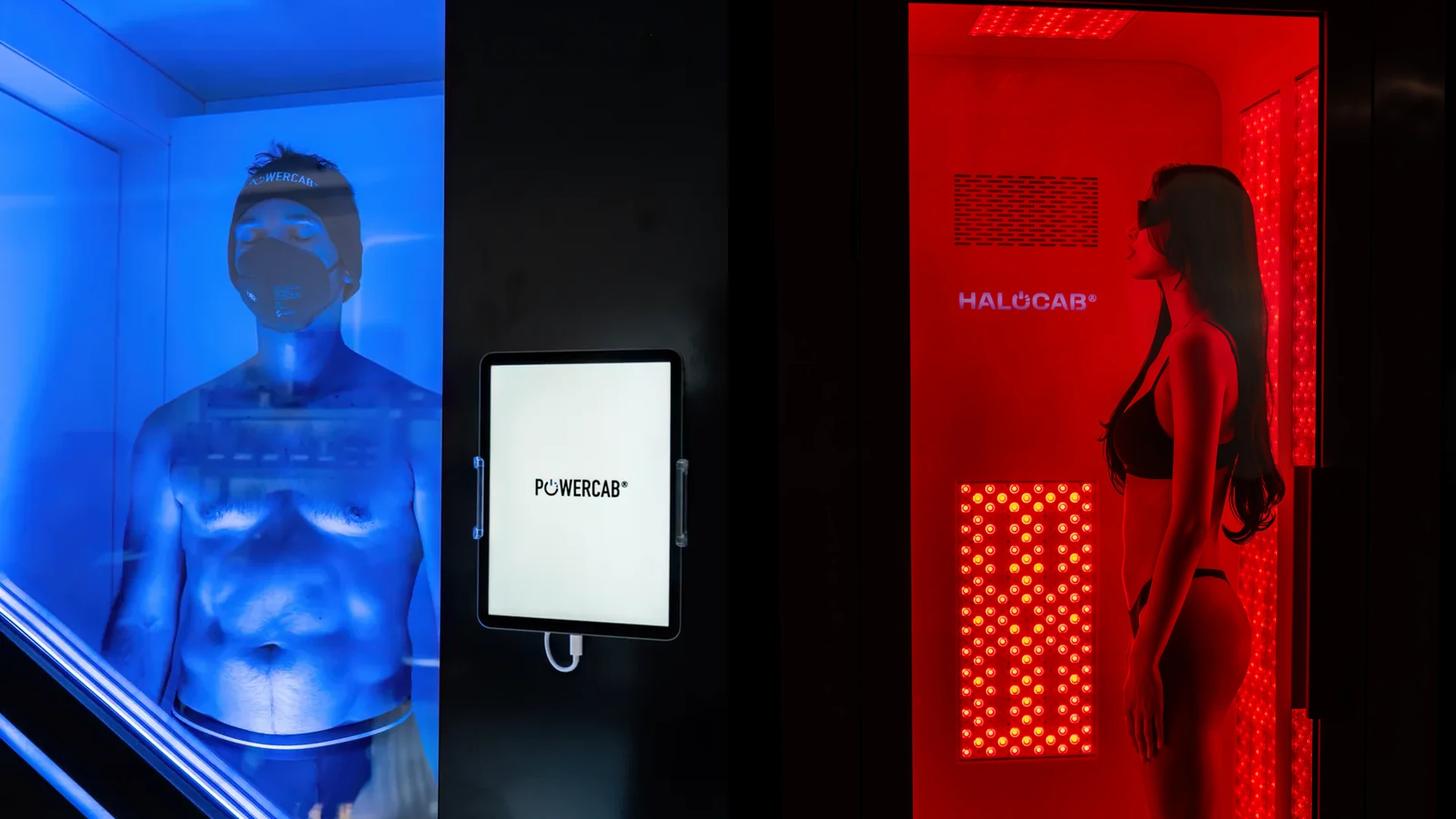
- Electric systems such as POWERCAB: higher initial investment, considerably lower and more stable operating costs, no handling of liquid nitrogen, a true whole-body principle with head exposure, natural refrigerants.
In the premium hotel segment, the electric variant has become established. Safety, serviceability, the true whole-body experience and the better ESG profile speak for it.
Step 3: Purchase price and total cost of ownership
The list price is only part of the calculation:
- Purchase price: an industry-wide range of roughly €20,000 to €150,000, depending on technology, model and equipment.
- Installation: power connection, floor space, ventilation where applicable. Nitrogen systems additionally require ventilation planning and tank logistics.
- Maintenance: annual service intervals, consumables, software updates.
- Operating costs: for electric systems primarily electricity (predictable), for N2 systems nitrogen supply (variable with utilisation).
- Staff: training, briefing and ongoing supervision of the application.
Rule of thumb: a seven-year TCO calculation significantly relativises the purchase-price difference between electric and N2 – usually in favour of the electric variant.
Step 4: Floor space, installation and infrastructure
- Floor space: a stand-alone cabin typically needs 4 to 6 m² including the operating and changing area.
- Floor loading: premium cold chambers weigh several hundred kilograms. In older buildings, the load-bearing capacity must be checked.
- Power: electric systems require a dedicated connection. Coordinate with the manufacturer before ordering.
- Accessibility: delivery and assembly need sufficient door widths and ideally ground-level access or a goods lift.
- Climate control: the cabin gives off waste heat during operation. Good ventilation extends the lifespan and improves the experience.
Step 5: Safety and compliance
In hotel operation with a mixed clientele, a documented safety protocol is mandatory:
- Briefing: clear explanation of the procedure, sensations and contraindications before the first application.
- Contraindication list: documented by the manufacturer, confirmed in writing by the guest (e.g. pacemaker, pregnancy, acute cardiovascular matters).
- Protective clothing: headband, mask, gloves and closed shoes – provided by the hotel.
- Supervision: a trained supervisor is required during every session. Unsupervised use is not an option.
- Insurance: clarify with the business liability insurer whether additional modules are needed.
Step 6: Service, warranty and support
A cold chamber is a long-term capital asset. Service quality is decisive:
- Service contract: how quickly is the manufacturer on site in the event of a breakdown?
- Spare parts: how long are parts guaranteed to be available?
- Software updates: are programmes maintained regularly?
- Training: is the initial training included in the price? Are there refreshers?
- Warranty period: at least two years, ideally extendable.
In the premium segment, “Made in Germany” is far more than a marketing argument. Reachable service teams, documented components and short response times make the difference between smooth operation and a stranded investment.
Step 7: Price architecture and ROI
A realistic business model should be in place before investing:
- Applications per day: with 2- to 4-minute applications and break scheduling, 20 to 30 sessions are realistic over a ten-hour opening day.
- Price per application: typically €40 to €80 in a hotel spa, with differentiated package prices.
- Utilisation: realistically 30 to 60 percent, depending on concept and marketing.
- Cross-sell: those who book cryotherapy are often also interested in massages, red-light applications or other complementary offerings.
Step 8: Positioning and marketing
Even the highest-quality cold chamber only pays off if it becomes visible:
- Web presence: a dedicated landing page with description, prices and booking function.
- Hotel materials: integrate into in-room information, the spa menu and the newsletter.
- Staff training: the concierge and spa reception must be able to explain the offering confidently.
- Partnerships: with local performance coaches, physio practices or biohacking communities.
Conclusion
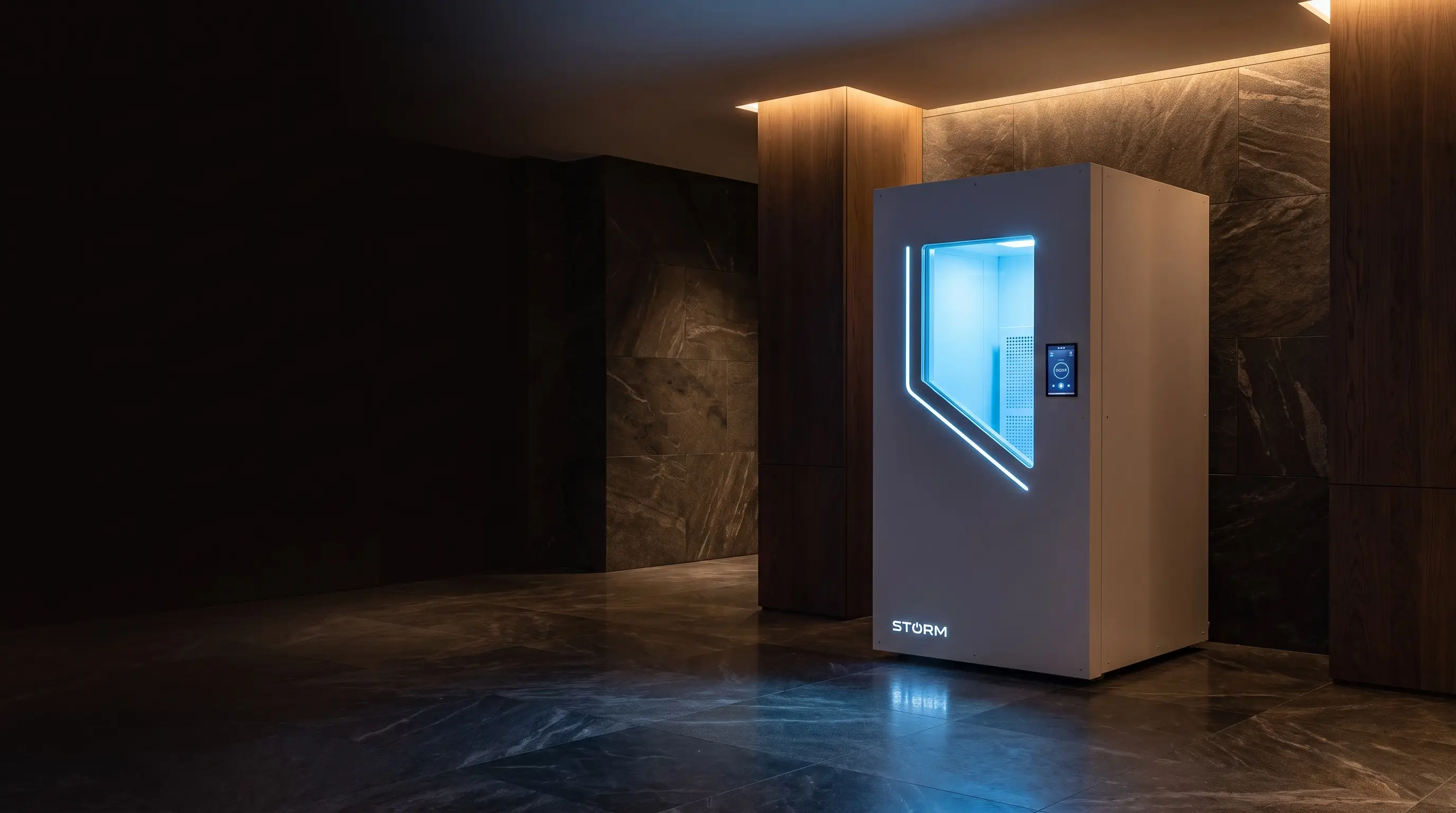
A cold-chamber investment in a hotel is a strategic decision, not merely an equipment purchase. Working carefully through the eight steps of this checklist – from positioning through the technology decision to marketing – builds a wellness offering that pays off over seven to ten years and positions the brand in the growing longevity segment. POWERCAB is designed for exactly this segment as an electric whole-body system, developed and produced in Berlin.
Discover POWERCAB for hotels & spas
Sources
- Global Wellness Institute: Global Wellness Economy Monitor 2025 (November 2025). https://globalwellnessinstitute.org/industry-research/2025-global-wellness-economy-monitor/