What a Cold Chamber Really Costs in Hotel Operation: Electricity, Maintenance, Staff and Hidden Items
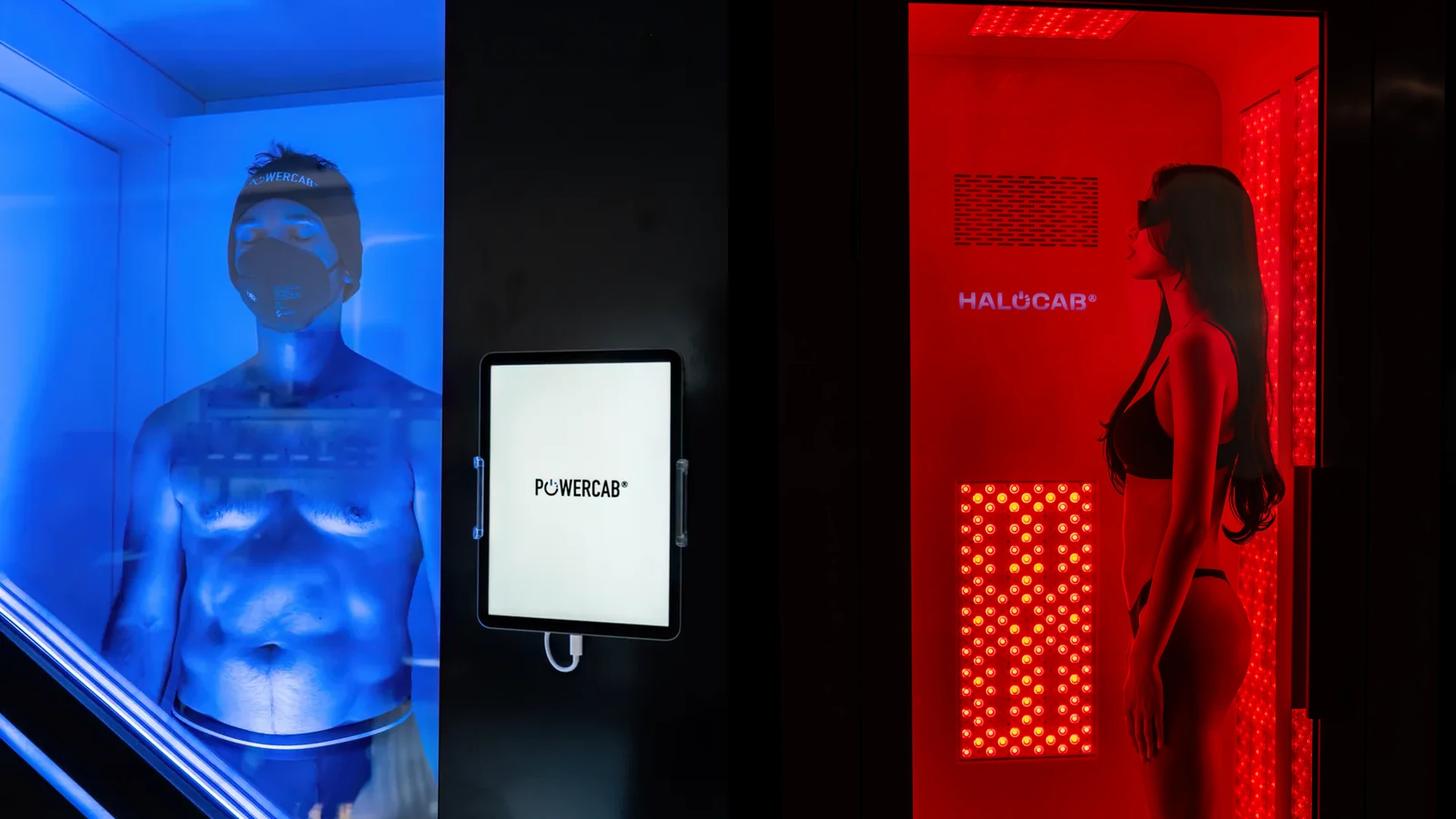
The purchase price of a cold chamber is communicated prominently. The running costs – electricity, nitrogen, maintenance, staff, consumables – by contrast often remain vague. For hotel buyers, controlling and spa directors, that is a problem: without a clean total-cost-of-ownership calculation, no valid decision can be made. This article opens up the cost structure and shows where electric systems such as POWERCAB are economically superior to nitrogen-based solutions.
Note: the following figures are illustrative orders of magnitude for a premium hotel in Central Europe. The real values depend on electricity price, the N2 supply market, utilisation and model, and should be calculated case by case with the manufacturer.
The purchase price is only half the truth
Industry-wide, cold chambers lie in a range of roughly €20,000 to €150,000 – depending on technology, model, equipment and software. Nitrogen systems tend to be cheaper to purchase; electric premium systems such as POWERCAB sit in the mid to upper range. The seven-year TCO calculation, however, shifts this picture considerably.
Item 1: Energy and consumption costs
This is where the biggest difference between the technologies lies:
- Electric systems: Electricity consumption is predictable, resulting in operating costs that can be reliably calculated based on usage, local electricity prices, and system size.
- Nitrogen systems: several kilograms of liquid nitrogen are typically consumed per session. [1] The monthly consumption costs vary strongly with utilisation.
The structure is decisive: nitrogen costs are variable and rise directly with utilisation. Electricity costs are considerably more stable, since electric systems call up no additional consumables per session. For a hotel with fluctuating occupancy, that is a planning advantage.
Item 2: Maintenance and service
- Electric systems: annual service intervals, primarily for compressor, refrigeration circuit and fans. Software updates are often included.
- Nitrogen systems: maintenance for tank connections, seals and valves, plus regular safety checks of the ventilation. Frequently additional costs for tank rental or maintenance.
With premium devices made in Germany, service reachability is a value in its own right. Fast response times and well-stocked spare-parts inventories prevent expensive downtime.
Item 3: Staff costs
In hotel operation, a cold chamber needs supervision and briefing staff:
- Every first session requires a documented briefing on procedure, protective clothing and contraindications.
- During operation, a suitably trained staff member should be available.
- Cleaning and hygiene between sessions.
- Booking management and guest communication.
Realistically, 15 to 25 minutes of staff time per guest including all accompanying processes – even for a 4-minute application. With nitrogen systems, effort for tank logistics and safety checks is added.
Item 4: Consumables and protective clothing
Recurring costs that are often forgotten at first:
- Headbands, masks, gloves: needed per application. With fabric variants, cleaning logistics; with disposable variants, ongoing procurement.
- Hygiene and cleaning: cleaning agents, cloths, disinfection where applicable.
- Shoe and robe logistics, if handled separately.
In total, an ongoing item that a clean calculation factors in.
Item 5: Insurance and compliance
- Extension of business liability insurance for cryotherapy applications.
- Documentation and liability processes (briefing forms, contraindication declarations).
- Staff training as a recurring item (initial training plus refreshers).
- With nitrogen systems additionally: ventilation maintenance, oxygen sensors, regular safety inspections.
Working cleanly here avoids expensive surprises.
Item 6: Marketing and sales
A cold chamber only pays off if it becomes visible. Realistic items for the introduction phase: a dedicated landing page with booking integration, ongoing content and social-media marketing, and photo and video production for communication.
Example calculation: 7-year TCO compared
A simplified example for a premium hotel with around 1,500 sessions per year, explicitly to be understood as a model calculation:
Electric premium system (POWERCAB class): purchase around €90,000 one-off, plus annual electricity, maintenance, proportional staff costs and consumables. Over seven years, this model yields a TCO in the order of about €470,000.
Nitrogen system: lower purchase (around €45,000), but higher and variable running costs for N2 consumption, tank maintenance, more logistics staff and ventilation checks. Over seven years, this model yields a TCO in the order of about €550,000.
Over seven years, the nitrogen system’s lower purchase price thus turns into a TCO disadvantage. At higher utilisation, the effect intensifies in favour of the electric variant. The exact figures vary with the electricity-price region, the N2 supply market and actual utilisation. The structural logic remains: in hotel operation, electric becomes more economical over the usage period.
What controlling should check before investing
- How many sessions per day are realistic over 12 months?
- What is the average selling price per session including packages?
- Which cross-sell effects are realistic in massage, beauty and F&B?
- How does the investment relate to the increase in the average room rate?
- Which refinancing options (leasing, financing) does the manufacturer offer?
Conclusion
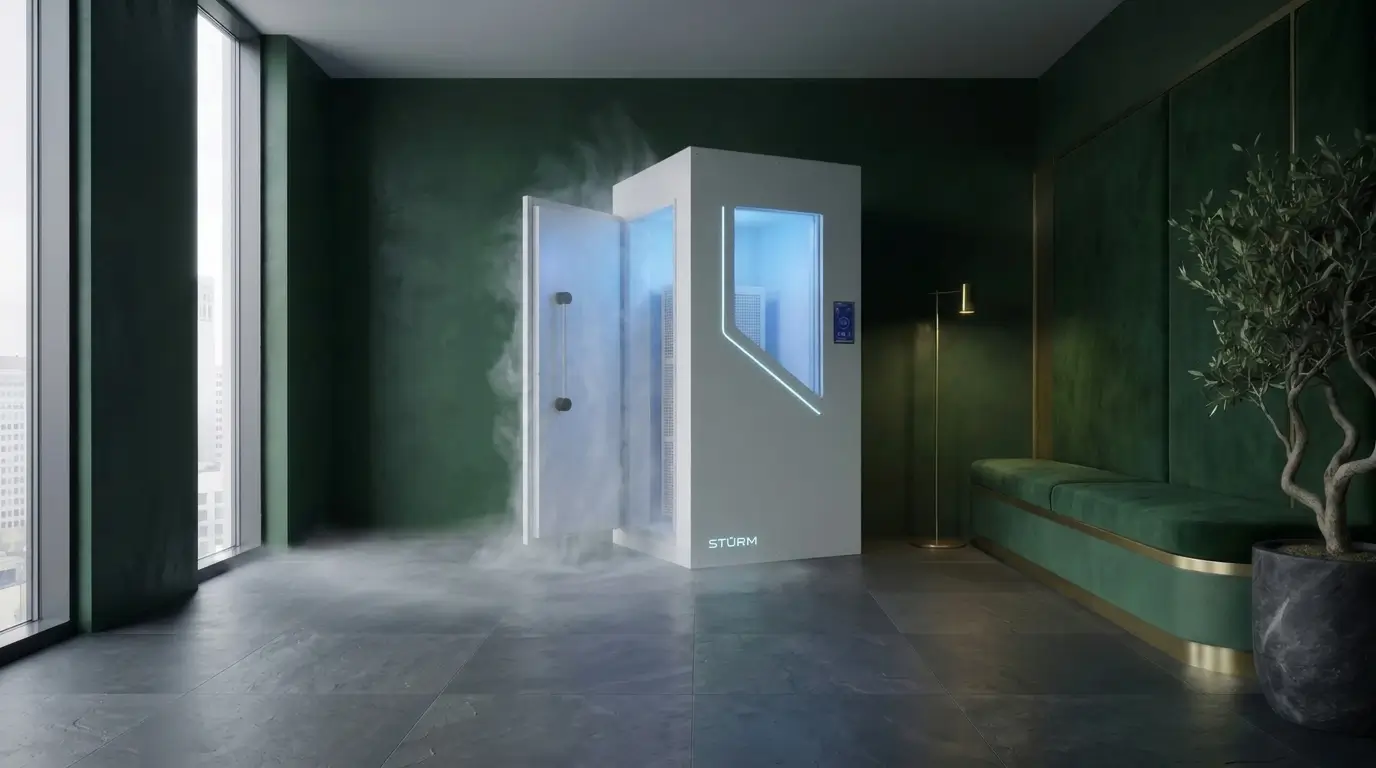
Buying a cold chamber is a TCO decision, not a purchase-price decision. Anyone who calculates cleanly over seven years almost always ends up with electric systems in hotel operation – because of lower and more stable energy costs, less logistics effort, better serviceability and higher safety. POWERCAB is designed as an electric whole-body system made in Berlin for exactly this calculation.
Discover the POWERCAB cold chamber
Sources
- Bouzigon R. et al.: Cryostimulation for Post-exercise Recovery in Athletes: A Consensus and Position Paper. Frontiers in Sports and Active Living, 2021;3:688828. https://doi.org/10.3389/fspor.2021.688828