Wellness Areas in Rehabilitation and Physiotherapy Facilities: Why Electric Cold Chambers Are the Simpler Choice
Medical rehabilitation clinics and physiotherapy facilities are increasingly expanding their offering with wellness components outside the prescribed plan. Cold chambers are often central to this – as a freshness and vitality application for the wellness clientele that many facilities are building up alongside prescribed care.
In equipment selection, different factors matter here than in a hotel spa: safety requirements, ventilation regulations, staff training and insurance. This article shows why electric systems such as POWERCAB are the simpler and more predictable choice for the wellness area of rehabilitation and physiotherapy facilities.
Context: wellness offerings in rehabilitation facilities
Classic rehabilitation clinics and physio practices have a clearly defined care mandate with prescribed applications. Alongside this, more and more facilities are establishing a wellness area for self-payers, accompanying persons and health-conscious clientele. Cold chambers, photobiomodulation cabins and applications such as magnetic muscle stimulation are popular building blocks for this.
Important: this wellness component is clearly separated from the prescribed plan. It is communicated as a self-funded service, not as a prescribed application. Equipment selection therefore follows wellness criteria, not medical-device requirements.
Why electric systems are simpler in rehabilitation settings
Three aspects make electric cold chambers such as POWERCAB the obvious choice here.
1. No nitrogen logistics on site
Nitrogen systems need tanks, regular deliveries, dedicated ventilation and oxygen sensors in the application rooms. In a building that already has plenty of requirements to meet, that is a considerable additional burden:
- Tank location with a fire-safety concept
- Ventilation system with documented capacity
- Oxygen sensors in application and storage rooms
- Emergency protocols for N2 leaks
- Regular safety inspections
With electric systems, all of this is unnecessary. Power connection, ventilation of the application room, maintenance plan – done.
2. Clear and stable cost structure
Rehabilitation facilities often calculate more tightly than premium hotels. A predictable cost structure is a concrete advantage here:
- Electricity consumption can be predicted and budgeted monthly.
- There is no dependency on fluctuating N2 supply prices.
- Maintenance intervals are plannable over the long term.
This simplifies the investment calculation and ongoing controlling.
3. A walk-in chamber, one routine for everyone
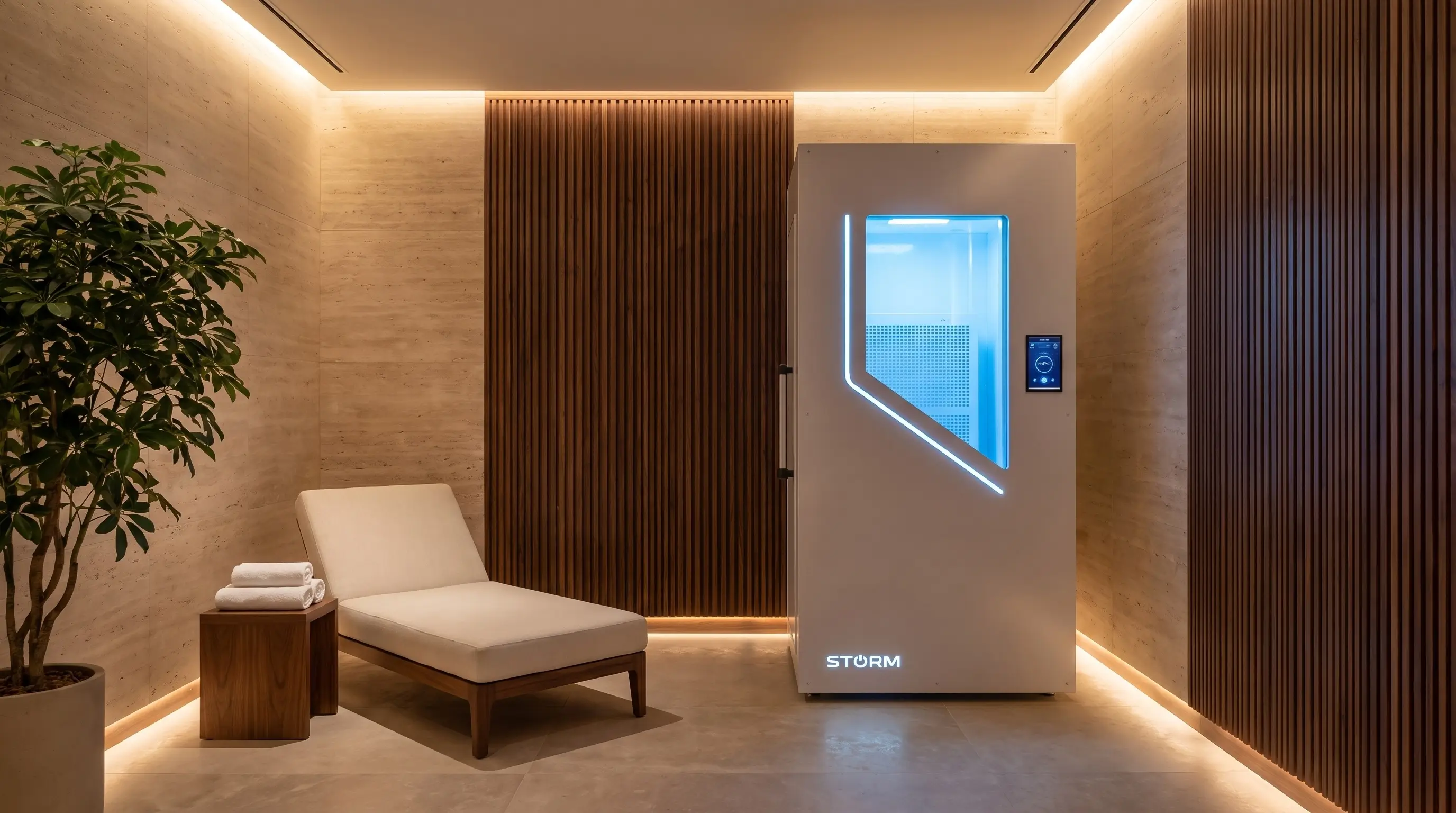
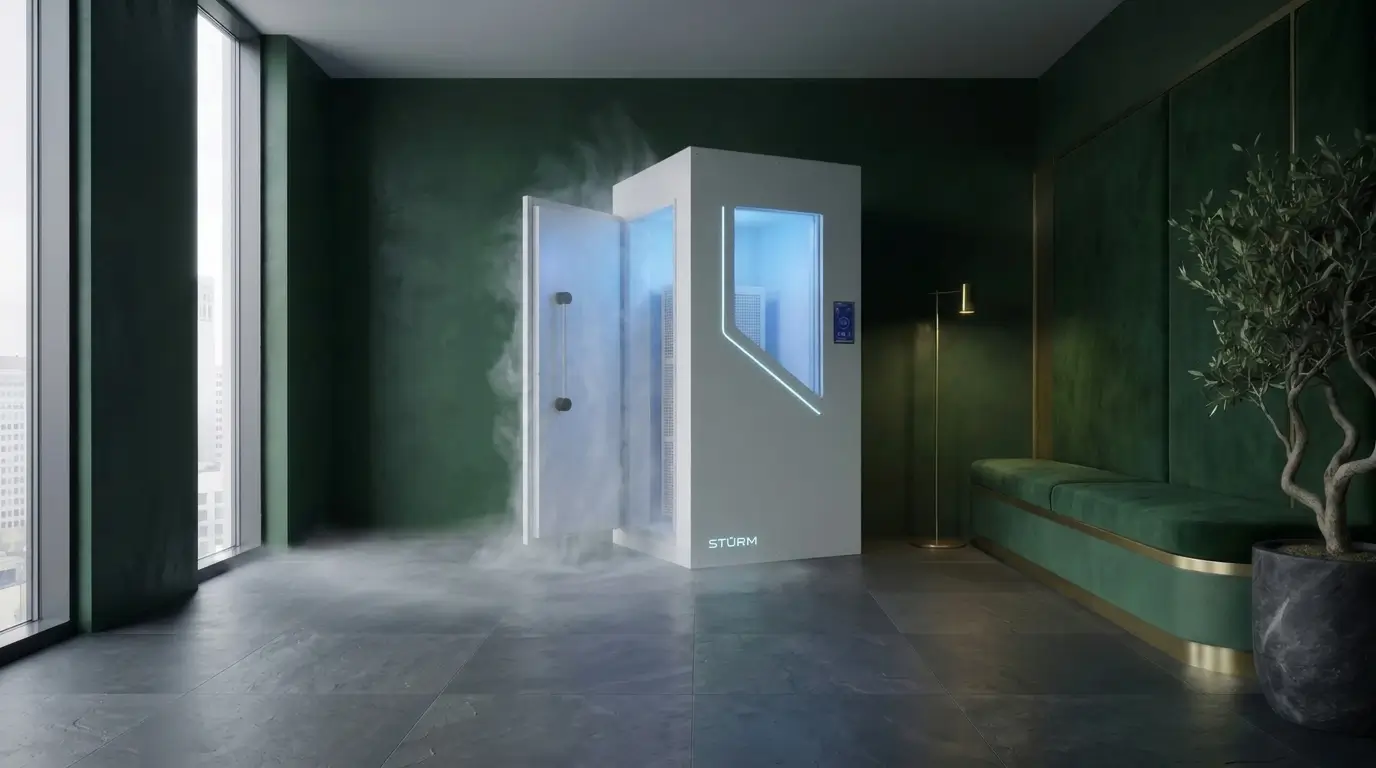
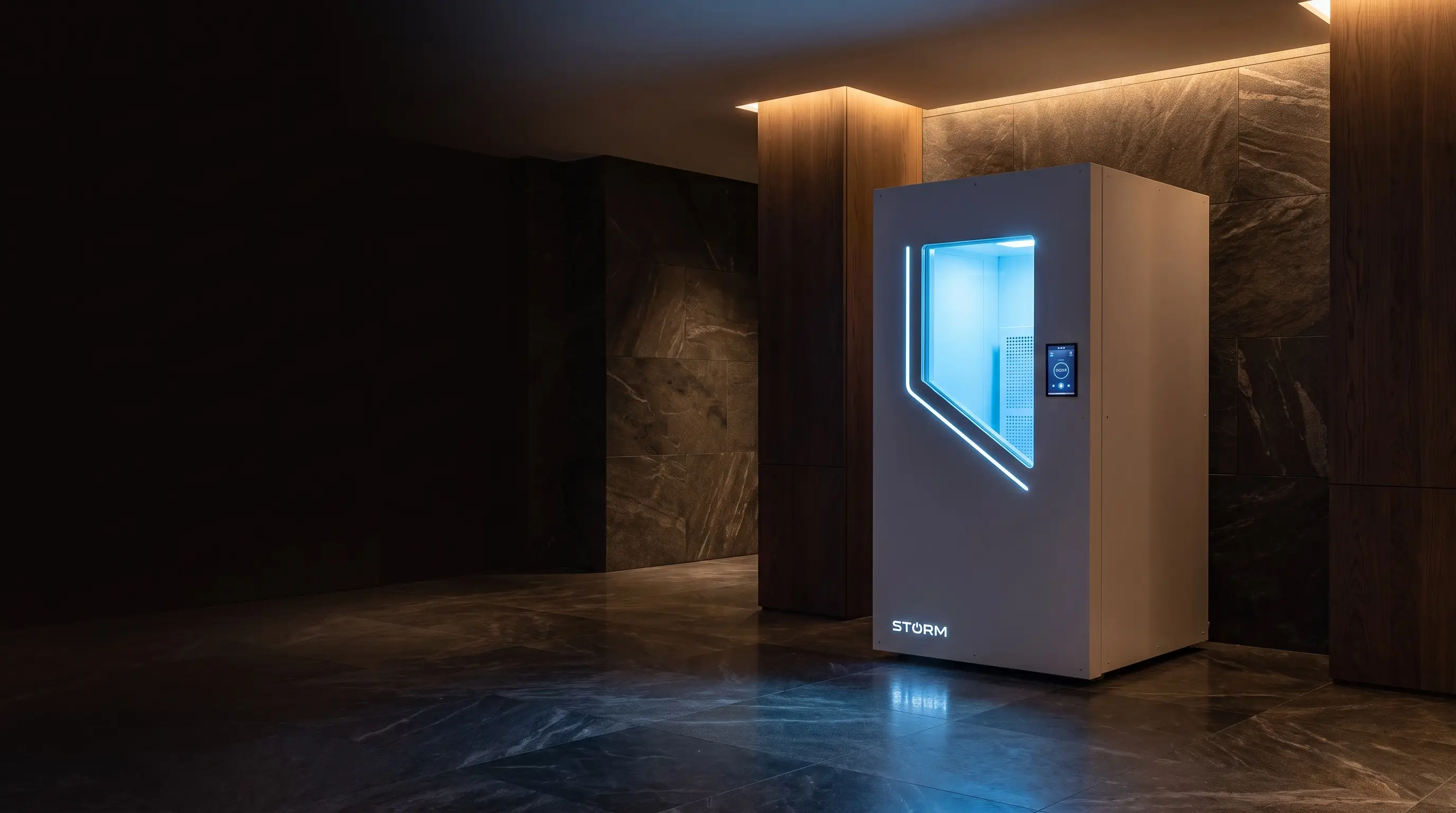
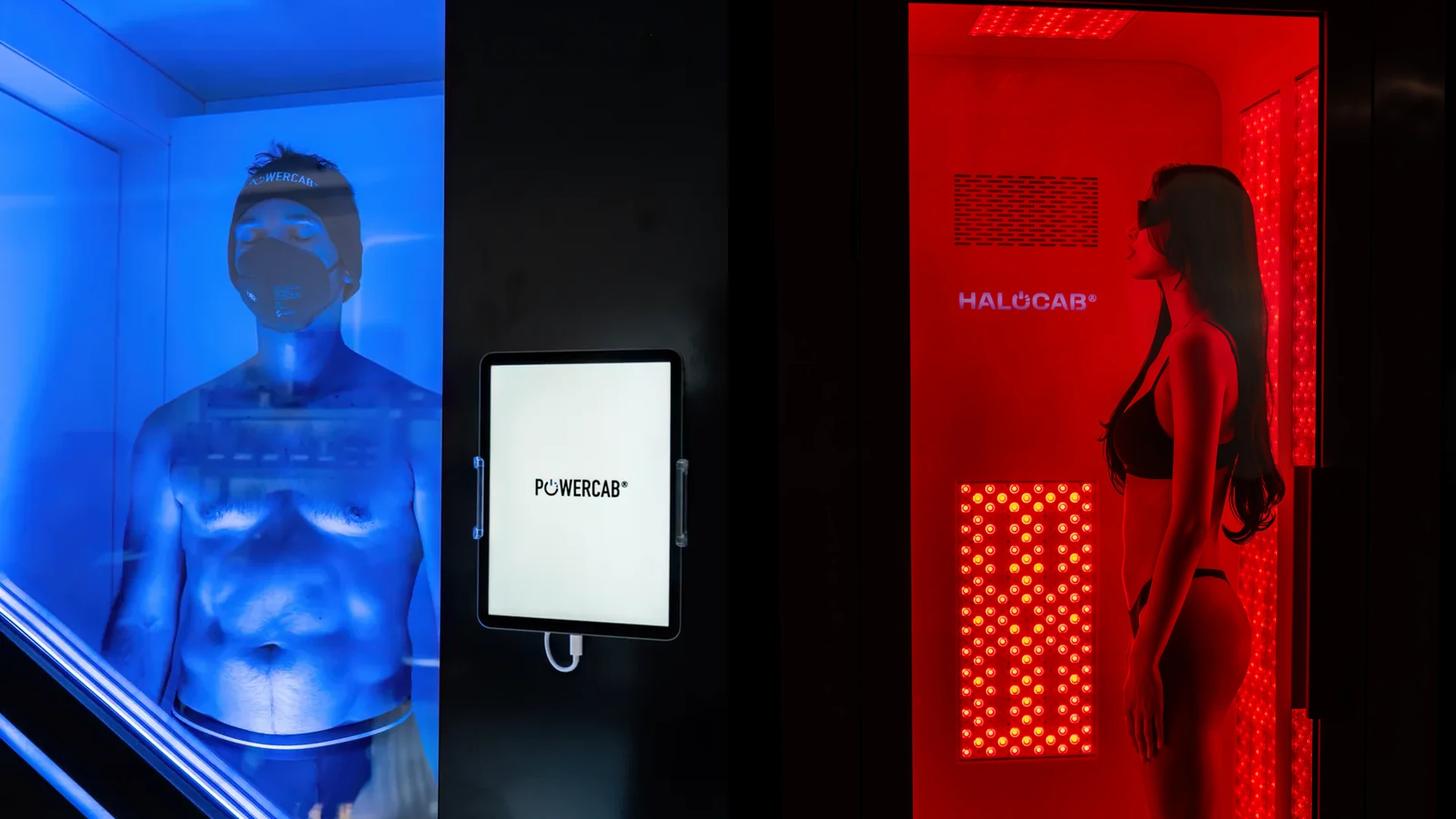
Nitrogen-based “cryo saunas” are typically built as a cylinder in which the head stays outside. [1] Electric cold chambers such as POWERCAB are walk-in chambers in which the whole body is exposed to the cold. For the operator that means one room, one routine and one briefing that is the same for every guest.
Comparison
Electric or nitrogen: what each brings into the building
Simplified comparison of the points made in this article. Actual requirements depend on location, building and system.
What to consider when integrating
- Room selection: ideally in a dedicated wellness area, clearly separated from the rooms used for prescribed care. A separate entrance and separate changing area make communication easier.
- Staff concept: staff from the prescribed-care side are often not the right choice, since that is where their day-to-day work lies. Dedicated wellness staff with a clear role make more sense.
- Suitability check: even in pure wellness operation, a form is used before every first session to ask, and record, whether anything speaks against it. If in doubt, guests should check with their doctor first.
- Clear communication: the wellness application must not be confused with prescribed applications. Clean signage, a separate price list, a separate booking workflow.
- Insurance: clarify with the business liability insurer whether the wellness component is covered.
Checklist
Integrating a cold chamber into the wellness area
0 of 12 points done
Room
Staff
Workflow
Communication
Cover
A planning aid. It is no substitute for legal, insurance or medical advice.
Safety workflow for wellness areas in rehabilitation facilities
- First appointment: detailed briefing, suitability check, documentation via form.
- Protective clothing: headband, mask, gloves, closed shoes – provided by the facility.
- Sessions: typically 2 to 4 minutes [1] in extreme cold; the temperature reached depends on the POWERCAB model. Trained staff supervise throughout.
- Hygiene: cleaning protocol between applications with clear responsibilities.
- Follow-up: a glass of water, a short rest, optionally connection to further modules.
Business model in the wellness area
Rehabilitation and physiotherapy facilities have an often underestimated advantage: a captive clientele with a clear health focus. Accompanying persons, former guests of the facility and local self-payers are potential wellness guests reachable without high acquisition costs.
Common models are:
- Single sessions; a range of €30 to €60 serves here as a working figure for your own calculation (an assumption, not market data).
- Ten-session cards with a volume discount for regulars.
- Monthly memberships for regular users.
- Combination packages with further wellness modules such as massage or red-light sessions.
Longer opening hours, which many facilities have anyway, can help utilisation.
Illustrative calculation
Revenue from single sessions: test your own assumptions
A calculation aid using your own assumptions, gross and without discounts from ten-session cards or memberships. Electricity, staff, maintenance and financing costs are not included. Not market data and not a revenue forecast.
What makes POWERCAB special in rehabilitation settings
- Electric, without liquid nitrogen: no tank and no N2 logistics on site.
- Predictable operating costs: budgeted monthly from electricity use.
- Walk-in whole-body chamber: one routine for everyone, easy to explain.
- Made in Berlin: service and spare parts direct from the manufacturer.
- Software integration: AI-supported programme control makes personalisation easier.
Conclusion
For rehabilitation and physiotherapy facilities building a wellness area, equipment selection is not purely a price question. Nitrogen systems bring a tank, supply logistics and additional safety equipment into the building. Electric systems such as POWERCAB do without them: a power connection, a ventilated room, a maintenance plan. Whether the offer pays its way comes down to the facility’s own calculation of utilisation, price and staffing.
Discover the POWERCAB cold chamber
Note: this article describes wellness applications from an operator’s point of view. It makes no claims about treating any condition and is no substitute for medical, legal or insurance advice. The paper cited [1] concerns athletes; its findings cannot simply be carried over to other groups.
Sources
- Bouzigon R. et al.: Cryostimulation for Post-exercise Recovery in Athletes: A Consensus and Position Paper. Frontiers in Sports and Active Living, 2021;3:688828. https://doi.org/10.3389/fspor.2021.688828