Cryotherapy, Sleep and Mental Wellbeing: What the Research Discusses, and What It Doesn’t
Cold and light applications are increasingly linked with relaxation, sleep and mental wellbeing. Interest is high, and that is precisely why a sober look at the research is worthwhile. There are signals, but they are preliminary, and they relate to wellbeing, not to the treatment of clinical conditions. This article puts both into perspective.
Important note up front: this article describes general research and mechanisms. It makes no statement about the health effect of any individual product and does not replace medical or therapeutic advice.
First, an important distinction
Clinical anxiety, mood and sleep conditions are medical conditions that require professional care. They belong in the hands of doctors and psychotherapists. Cryotherapy is not a treatment for them and cannot replace proper medical care.
What this is about instead: a possible complementary contribution to relaxation and wellbeing. In that role – as a wellness and wellbeing application rather than a therapy – the topic can be presented responsibly.
What the research discusses on mental wellbeing
A frequently cited reference is the systematic review and meta-analysis by Doets et al. (2021), which examines whole-body cryotherapy as a complementary measure. [1]
The authors describe their findings explicitly as preliminary and qualify them clearly: the number of studies is small, heterogeneity is high, and larger randomised controlled trials are needed to confirm the results. [1] "Preliminary" here is not a marketing word but a fair description of the state of research – and it should be communicated exactly that way.
This review was conducted on a specific group with clinical complaints. Its results cannot be transferred to general users in a wellness context and are not a statement about the effect of any product.
What the research discusses on sleep
In the area of sleep, the most widely discussed signals come from elite sport. A study by Schaal et al. (2015) in elite synchronised swimmers reports changes in sleep-onset and sleep-efficiency measures, as well as in perceived fatigue, under whole-body cryostimulation compared with a control group. [2] A study by Bouzigon et al. (2014) in professional basketball players describes a change in subjectively perceived sleep quality. [3]
These findings come from athletic populations and cannot simply be transferred to all users. They frame the topic in a recovery and wellbeing context – not as proof of effect.
Possible mechanisms, as a hypothesis
Why is cold discussed in connection with mood and sleep at all? The literature points mainly to one approach: a shift in the autonomic nervous system toward greater parasympathetic activity, measurable via heart rate variability. That describes a physical response to the cold stimulus, not a health effect.
This is a hypothesis, not an established mechanism. For communication, the rule is: presentable as a plausible explanation, not as a proven chain of effect.
How HALOCAB complements the topic
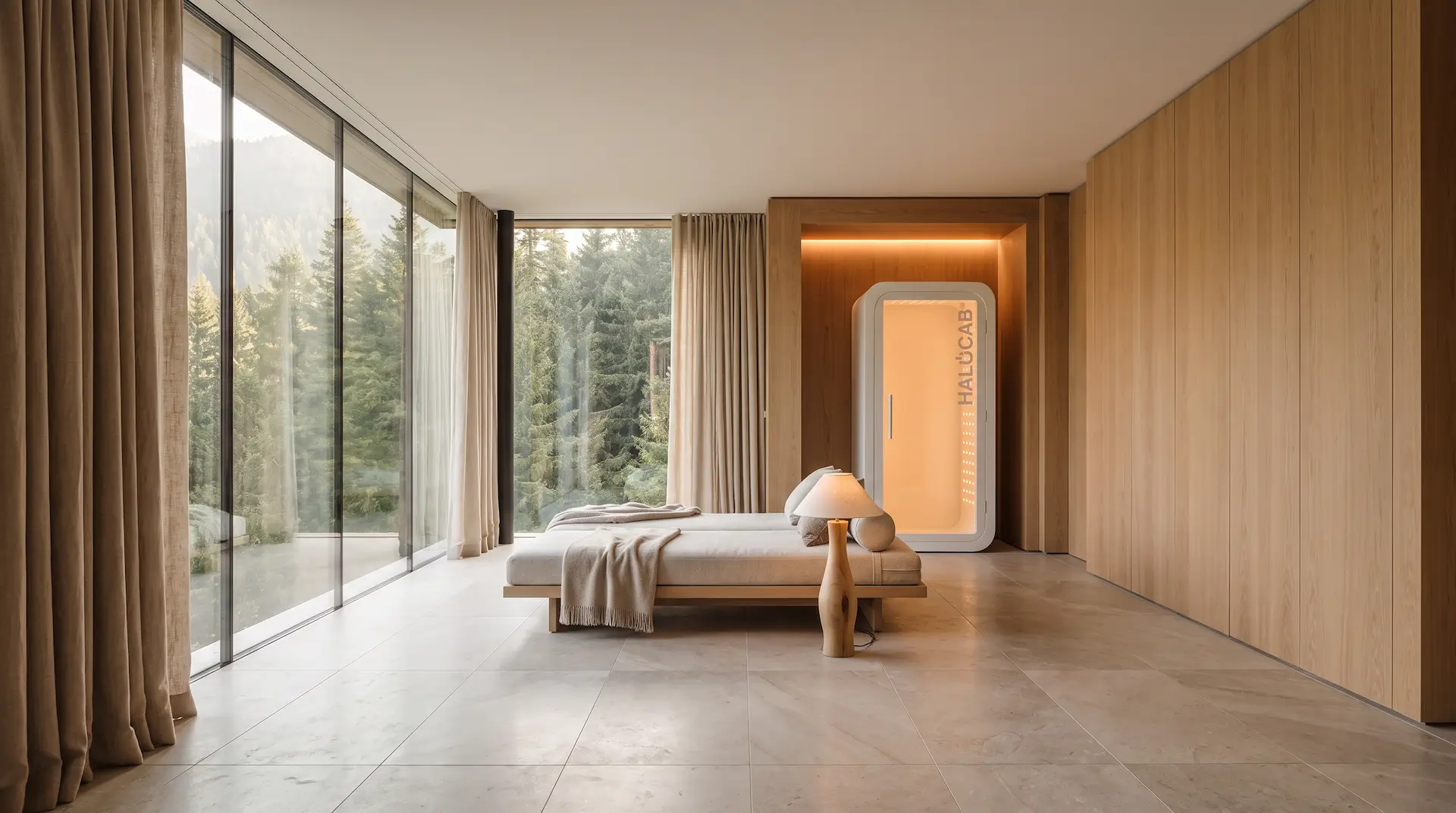
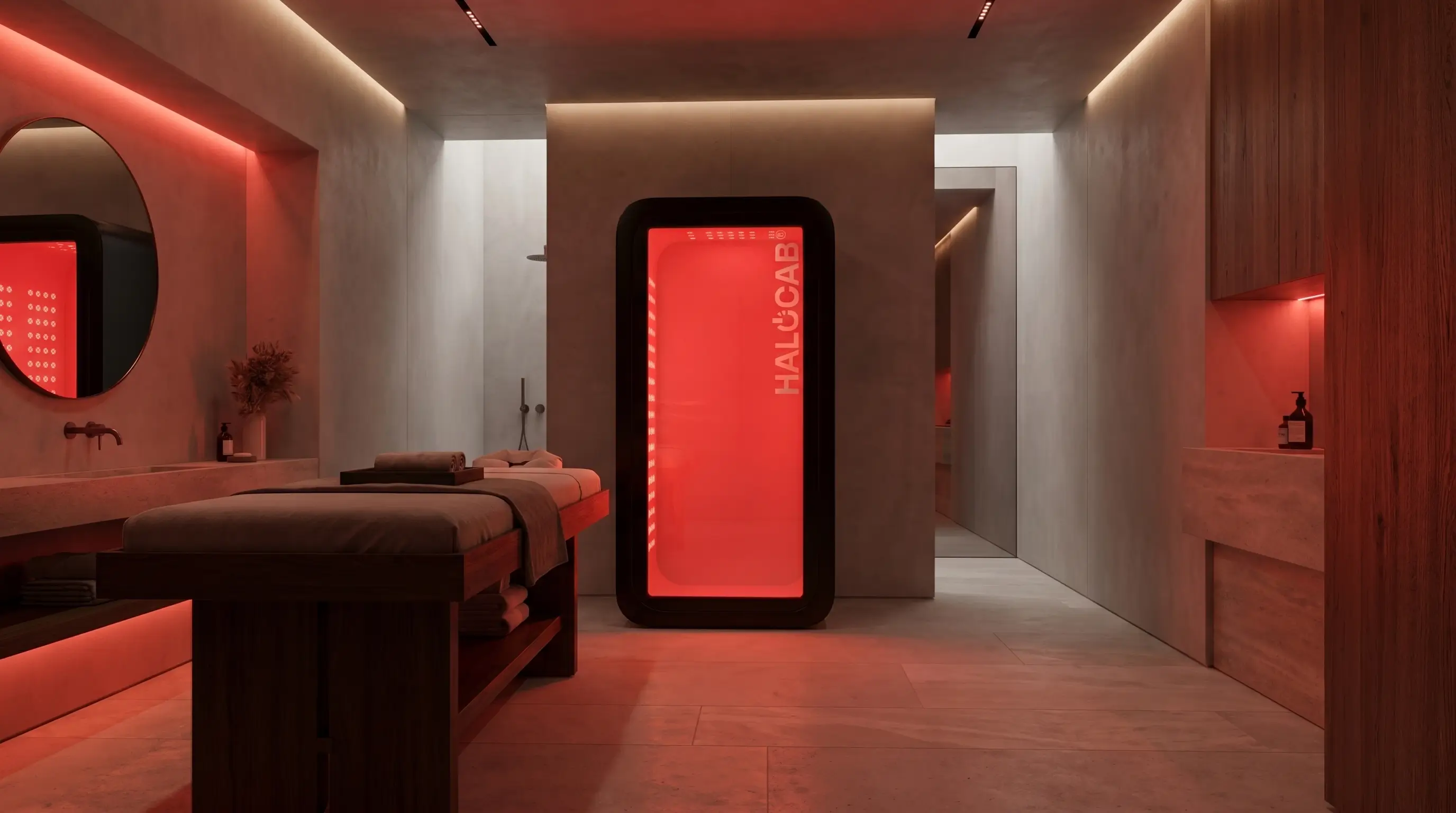
Beyond cold, the HALOCAB cabin addresses relaxation on a sensory level: calm light, a pleasant breathing atmosphere, a sound and ambience element. Here too, honest framing is key. These elements create an immersive feel-good experience and a calm atmosphere. They are positioned as a relaxation and ambience application, not as a treatment.
Who the topic pays off for
- Longevity and wellness studios: as a feel-good and relaxation module focused on regeneration and calm.
- Premium hotels and retreats: as a building block of a "reset" or "sleep & recovery" programme.
- Recovery studios: as a calm complement to the activating cryo experience.
Language is decisive. Those who communicate wellbeing and relaxation, and who describe preliminary research as preliminary, build a credible offering. Those who make healing promises risk trust and stand on thin legal ice.
Conclusion
The research on cold, sleep and mental wellbeing exists, but it is preliminary and widely discussed. As a wellness and wellbeing offering – communicated honestly and clearly distinguished from clinical treatment – the topic is both credible and attractive. Anyone experiencing health complaints should turn to professionals; a wellness offering is no substitute for that.
Discover the POWERCAB cold chamber · Discover the HALOCAB longevity cabin
Sources
- Doets J.J.R., Topper M., Nugter A.M.: A systematic review and meta-analysis of the effect of whole body cryotherapy on mental health problems. Complementary Therapies in Medicine, 2021;63:102783. https://doi.org/10.1016/j.ctim.2021.102783
- Schaal K. et al.: Whole-Body Cryostimulation Limits Overreaching in Elite Synchronized Swimmers. Medicine & Science in Sports & Exercise, 2015;47(7):1416–1425.
- Bouzigon R., Ravier G., Dugué B., Grappe F.: The use of whole-body cryostimulation to improve the quality of sleep in athletes. British Journal of Sports Medicine, 2014;48(7):572.