Cryotherapy: What Happens Inside Your Body at −110°C
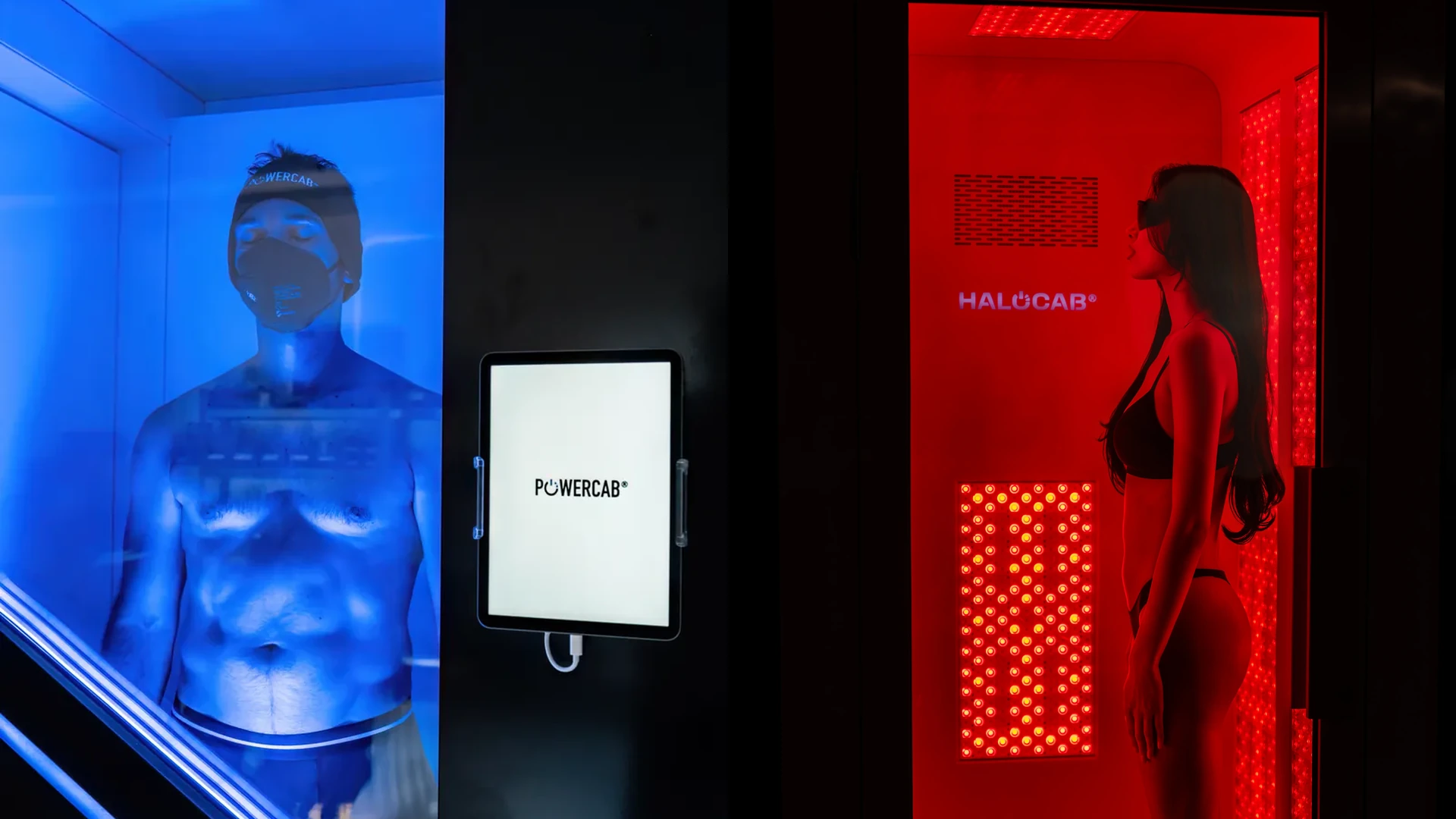
People stepping out of whole-body cryotherapy for the first time tend to describe the same thing: feeling alert and calm at once. What lies behind it is not merely “cold”, but a coordinated sequence of the body’s own responses that unfolds in just a few minutes. Inside the POWERCAB, the ambient temperature drops to as low as −110 °C and a session lasts only 2 to 4 minutes – and in that short window the body runs through a surprisingly orderly chain reaction. This article explains what happens physiologically.
The stimulus begins at the skin
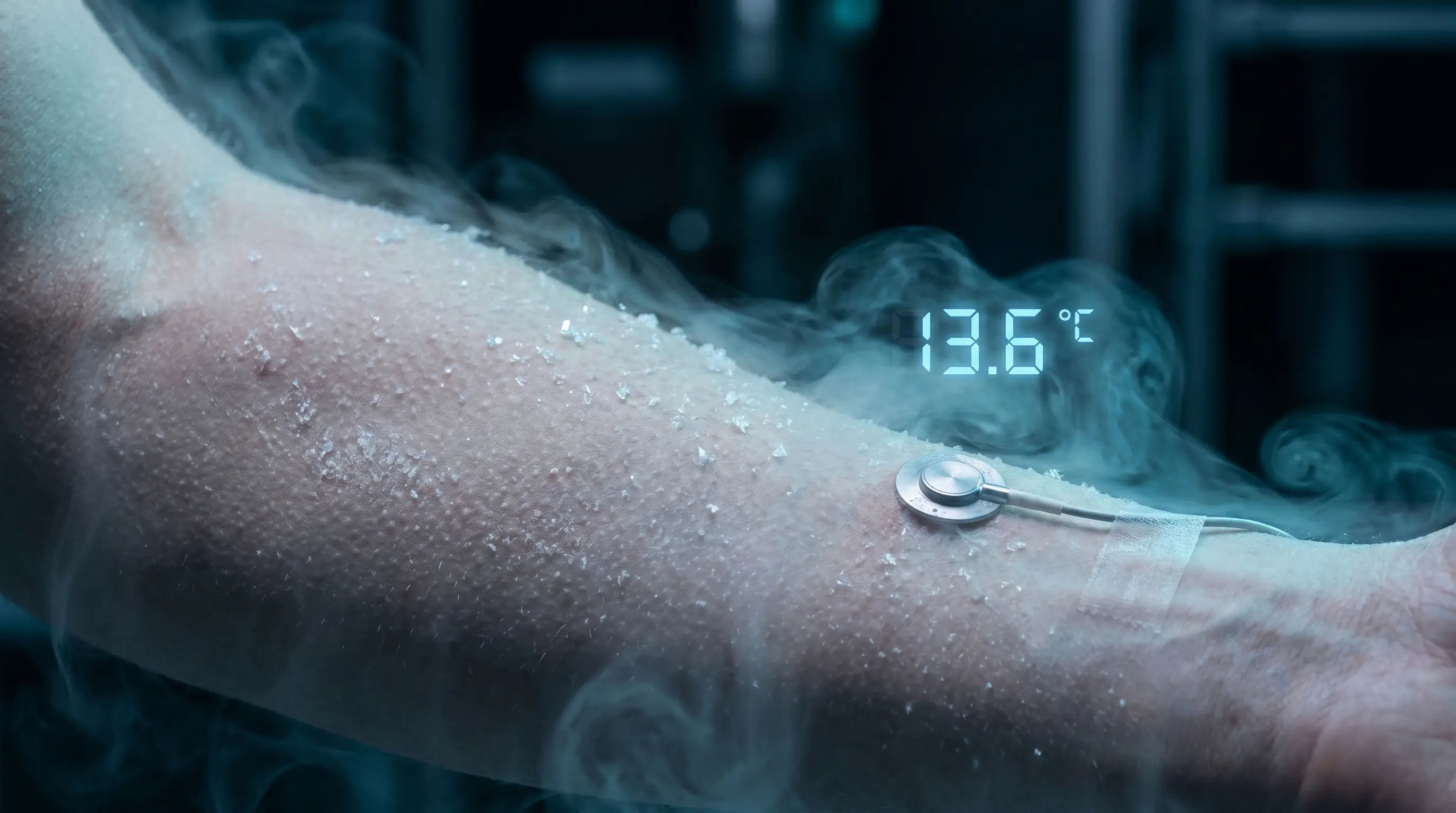
What matters is not core temperature but the skin surface. The extreme ambient cold lowers skin temperature sharply within a short time, without cooling the body as a whole. A randomized study by Jdidi et al. (Journal of Physiological Anthropology, 2024) identified a threshold of around 13.6 °C skin temperature as a physical reference point for an effective cold stimulus. It is this brief, intense surface stimulus the body reacts to – not the slow cooling of an ice bath.
Step 1: The blood vessels contract
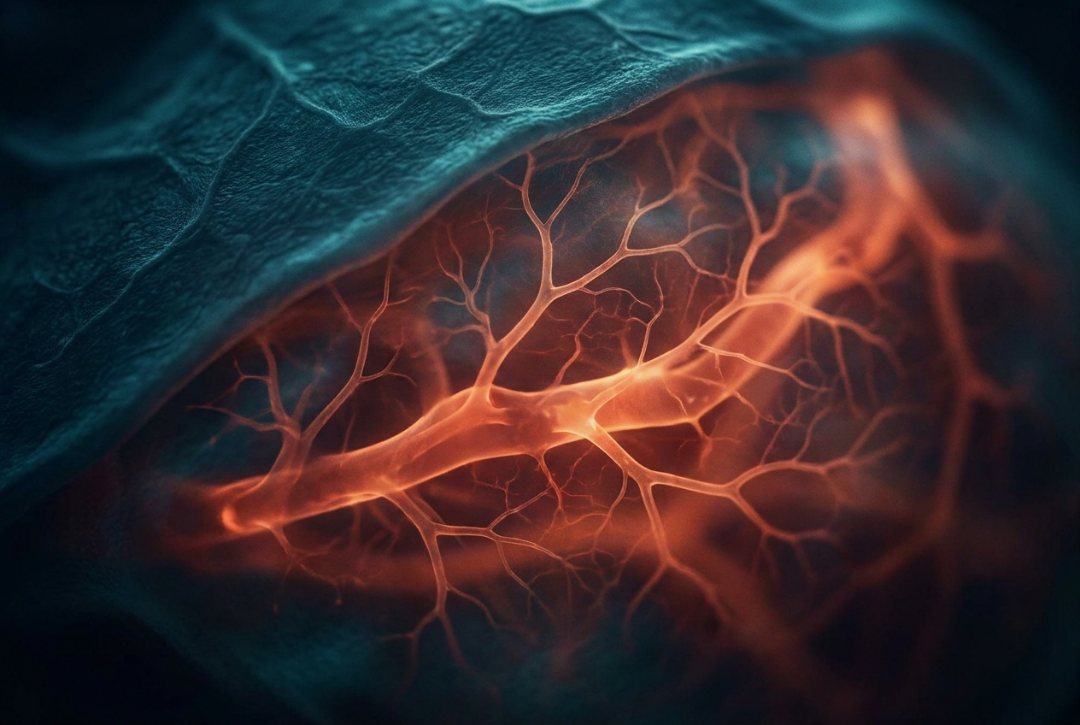
As soon as the skin’s cold receptors fire, the superficial blood vessels narrow (vasoconstriction). Blood is redistributed from the periphery toward the core, where it circulates around the internal organs. This is a natural protective response: core temperature stays stable while skin circulation is temporarily reduced.
Step 2: The blood flows back
Once you leave the chamber, the process reverses. The vessels widen again (vasodilation) and the previously centralized blood flows back out to the periphery. This alternation of narrowing and widening acts as an impulse for the circulation. Many users describe in this phase the characteristic sense of warmth and freshness that sets in immediately after a session.
Step 3: The body generates its own heat
In parallel, the metabolism responds. Cold exposure activates brown adipose tissue which – unlike white fat – is specialized in converting energy into heat (thermogenesis). This internal heat production is a well-described physiological mechanism of cold adaptation. It explains why the brief stimulus does not feel like cooling down, and why many people leave the chamber with a sense of inner warmth.

The nervous system switches gears
The intense stimulus also engages the autonomic nervous system. Reviews of whole-body cryotherapy classify short cold exposure as a strong sensory stimulus that influences autonomic balance (Lombardi et al., Frontiers in Physiology, 2017). At the level of wellbeing, this explains the apparent contradiction so many describe: calmer and more alert at the same time. For context, the research describes mechanisms and subjective experience – no more and no less.

Why the technology makes the difference
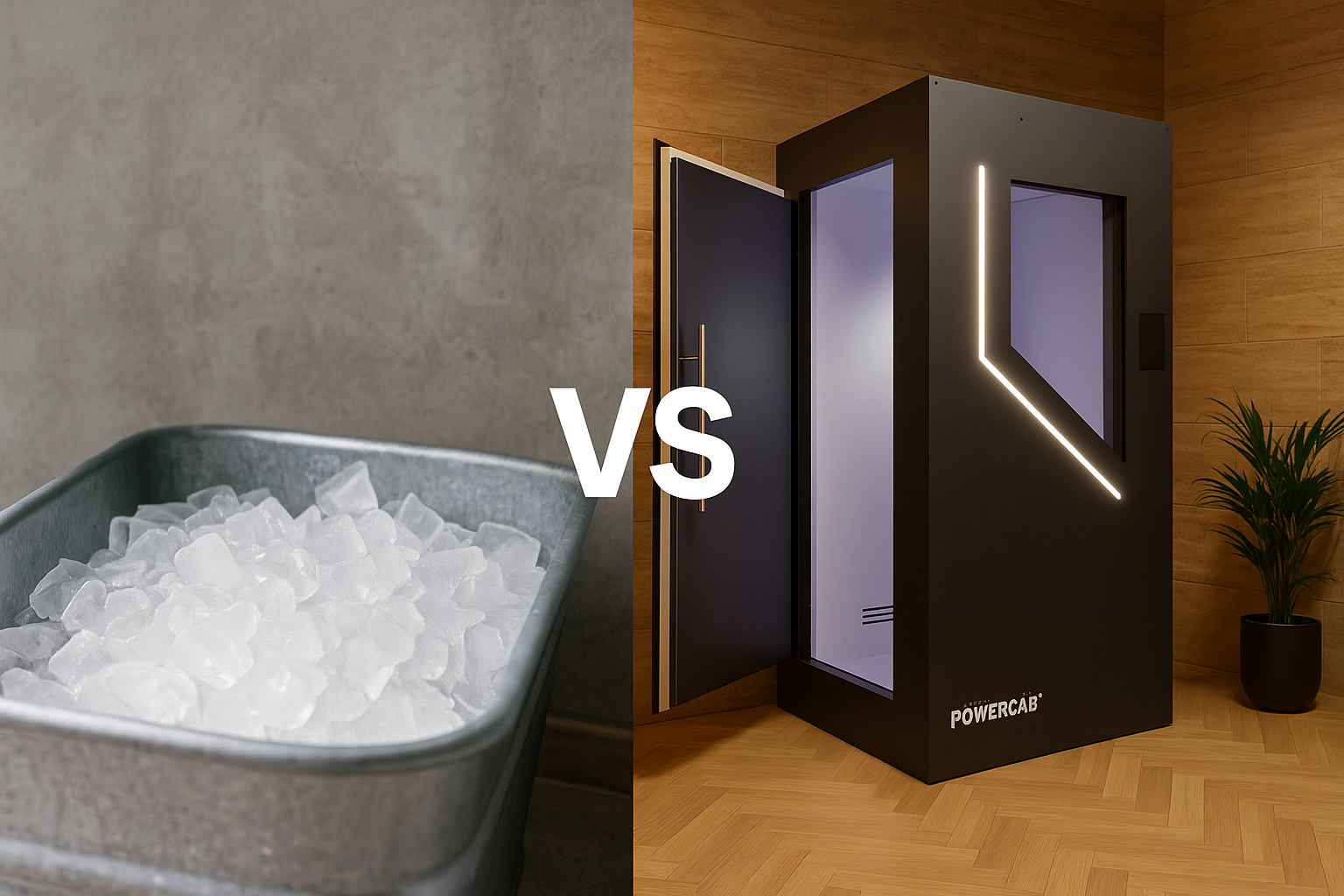
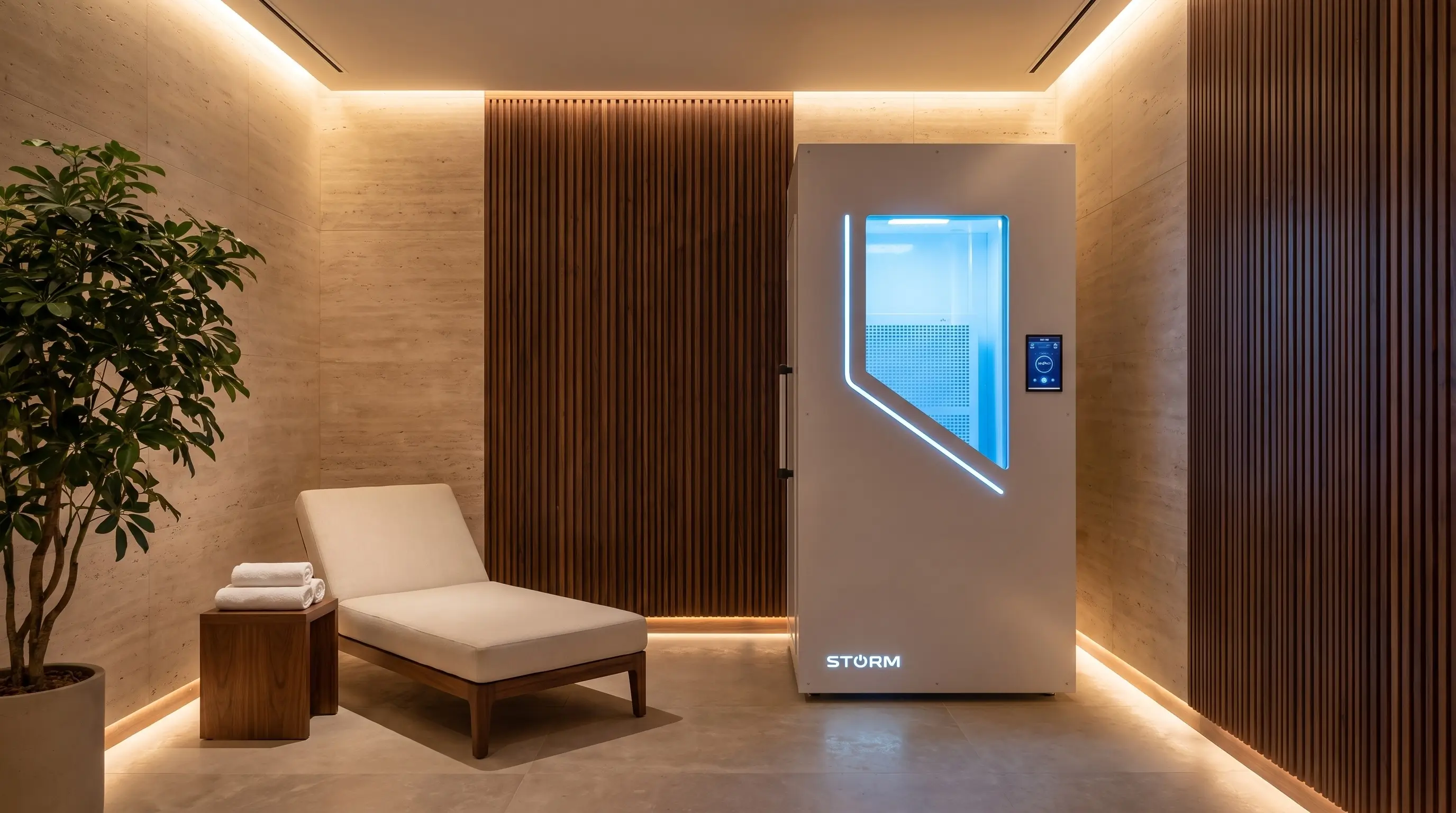
For this chain reaction to run cleanly, an even, dry cold stimulus is essential. The POWERCAB is electric – entirely without liquid nitrogen. That means an even ambient temperature throughout the interior, a controllable process and operation at comparatively low energy demand. For operators in hotels, spas, rehab and physiotherapy settings and sports clubs, this delivers a reproducible experience for the guest and an economical, low-maintenance operation – Made in Germany.
Conclusion
What looks like “just cold” from the outside is, on the inside, a precisely timed sequence of vessel constriction, blood return, the body’s own heat production and a shift in the nervous system – all within a few minutes. This interplay is why whole-body cryotherapy has become a fixed component of modern recovery and longevity concepts. Anyone looking to offer it professionally needs technology that delivers the stimulus reliably and reproducibly.
Sources
- Jdidi H et al. (2024): Optimal duration of whole-body cryostimulation exposure to achieve target skin temperature: influence of body mass index – a randomized cross-over controlled trial. Journal of Physiological Anthropology 43:28. Full text
- Lombardi G, Ziemann E, Banfi G (2017): Whole-body cryotherapy in athletes: from therapy to stimulation. An updated review of the literature. Frontiers in Physiology 8:258. Full text (PMC)
.webp)
.webp)