HALOCAB Explained: 5 Longevity Applications in One Cabin – The Complete Guide
The longevity market is developing rapidly. The Global Wellness Institute forecasts annual growth of 10.8 percent through 2029 for the “traditional and complementary medicine” segment – which includes photobiomodulation, longevity and biohacking. [1] Spa operators, hotel directors and studio founders therefore face a practical question: which devices make sense when floor space, staff and budget are limited?
HALOCAB answers that question with a multi-modality concept: five wellness applications in one cabin. This guide explains what lies behind it, for whom it pays off, and why combining several modalities enables a different business model than a single device.
What is HALOCAB?
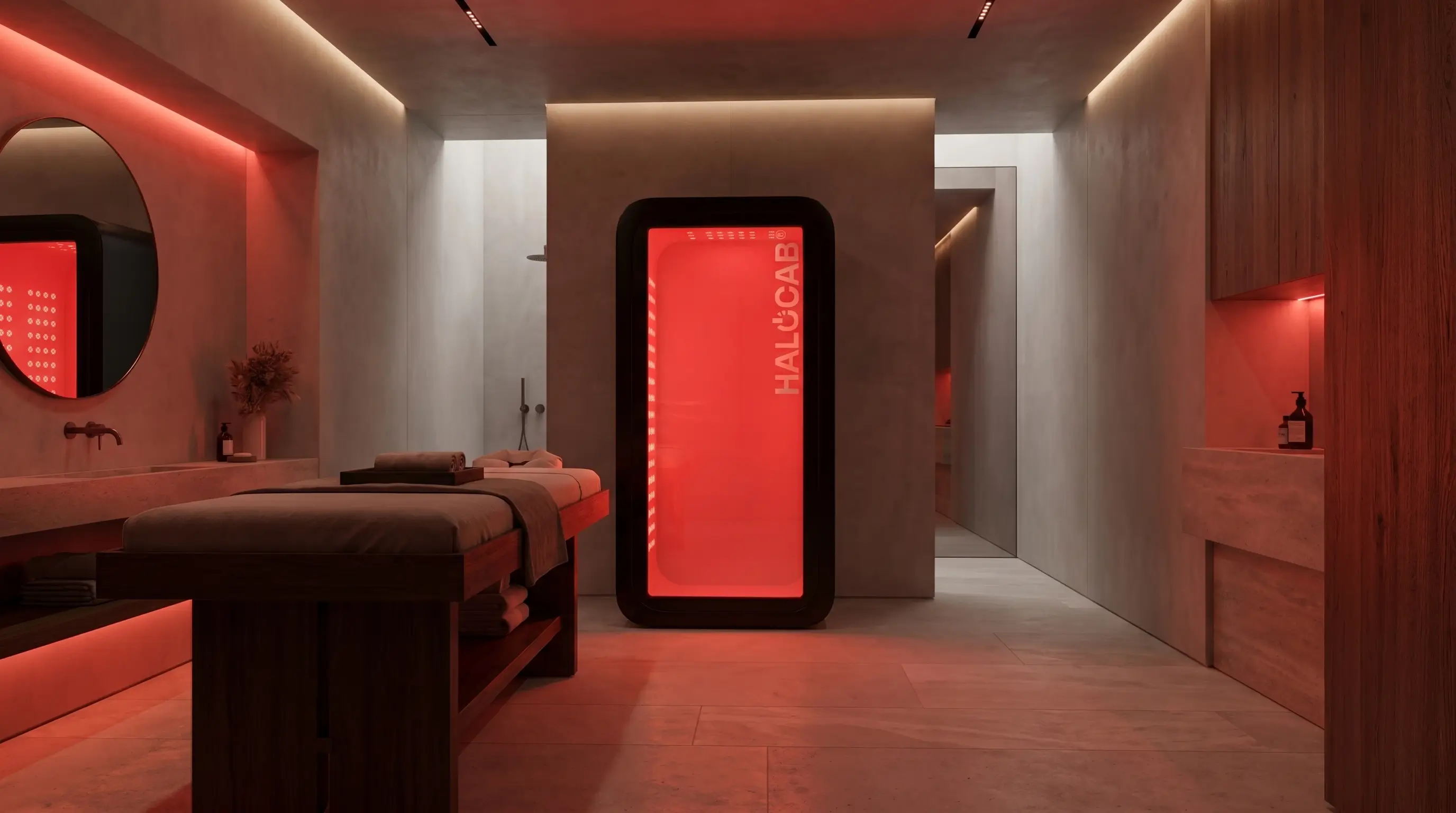
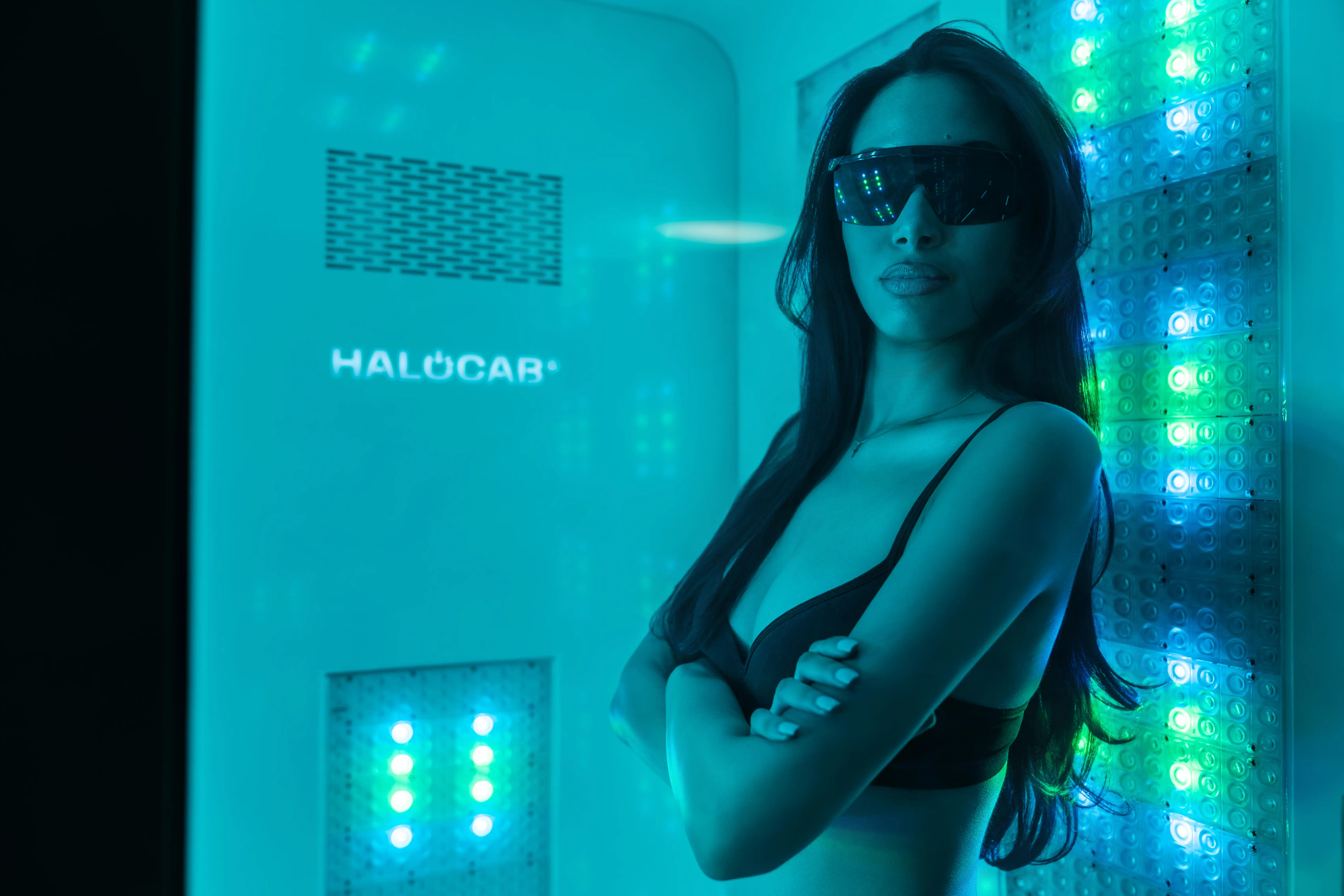
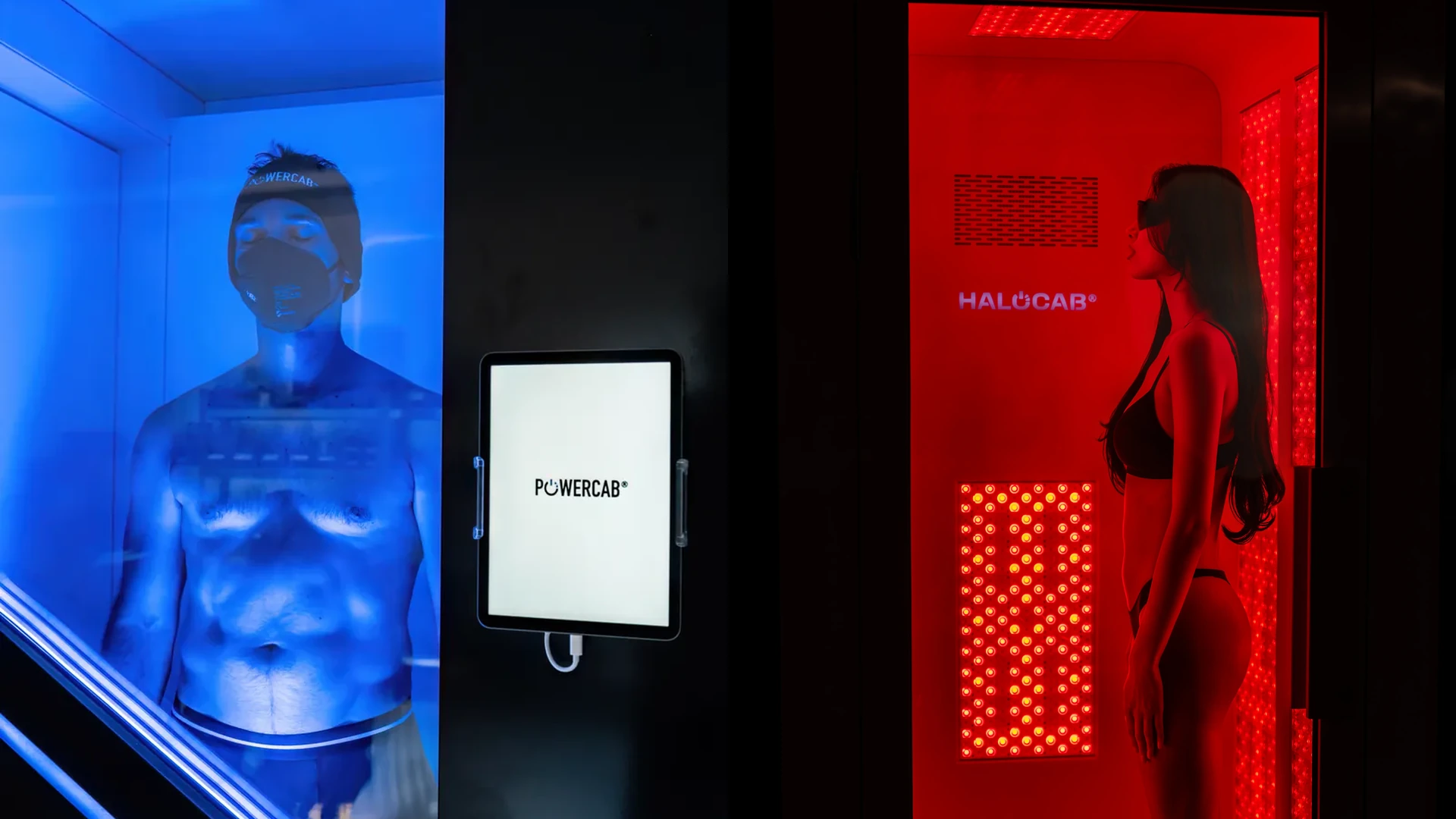
HALOCAB is a longevity cabin developed and manufactured in Germany. It combines five applications in one closed, AI-supported system: light, salt inhalation, ionised oxygen, frequencies and aroma. The user takes a seat for a typically ten-minute application, selects a programme and experiences several modalities at once.
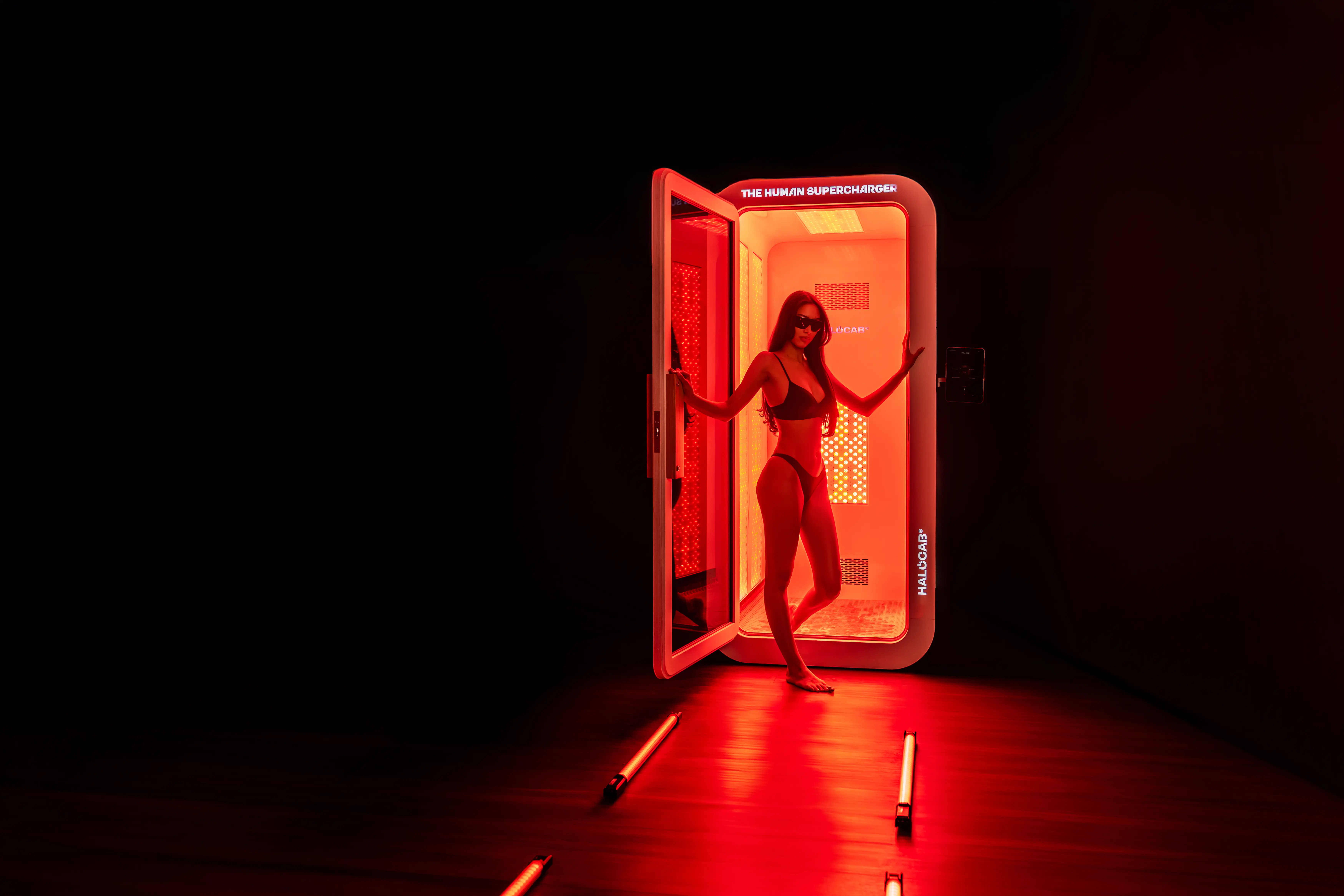
The difference from single-purpose solutions is clear. A red-light lounger offers one modality in one position. An infrared sauna uses heat as its sole mechanism. HALOCAB, by contrast, is designed as a premium longevity system that unites several applications in one cabin. It is positioned as a “Human Supercharger” – a concept oriented toward lifestyle, wellbeing and performance.
The five pillars in detail
1. Light – photobiomodulation across the full spectrum
Off-the-shelf red-light devices usually cover two wavelengths (660 nm red, 850 nm near-infrared). HALOCAB works with a considerably broader spectrum:
- 480 nm (blue) – used in modern light applications for, among other things, circadian programmes
- 525 nm (green) – a more recent wavelength integration for sensory-visual programme goals
- 630/660 nm (red) – the classic photobiomodulation wavelength, primarily near the surface
- 810/830/850 nm (near-infrared) – deeper-penetrating and the most broadly documented
- 940/1,060 nm (extended NIR) – a modern extension of the classic NIR range
Photobiomodulation acts at the cellular level: light in the 600 to 1,100 nm range is absorbed by the mitochondrial enzyme cytochrome c oxidase. [2] In a spa and longevity context, PBM is used as a wellness modality for wellbeing and recovery – calm, non-thermal and easy to integrate into larger programmes.
2. Salt inhalation – halotherapy in a controlled climate
Inhaling fine salt particles has its origins in the 19th-century Polish salt mines and is today part of modern spa concepts. In HALOCAB, halotherapy serves as a comfort module: for a pleasant breathing climate, a refreshing experience and a more immersive cabin session.
3. Ionised oxygen – invigorating air quality
Negatively ionised air is associated with an atmosphere perceived as pleasant – similar to the feeling near a waterfall or after a thunderstorm. HALOCAB creates a controlled climate that many users associate with freshness and energy. This complements the other modalities on a sensory level and supports the holistic application experience.
4. Frequencies – the Frequency Resonance System
HALOCAB integrates a sound- and vibration-based system that orients sessions toward different target states:
- Delta/Theta – relaxation and deep calm
- Alpha – balance and meditative states
- Beta – focus and attention
- Gamma – concentration
The frequencies define the character of each programme. They structure the application and distinguish sessions from one another in mood and character.
5. Aroma – the sensory finishing touch
A subtle scent component completes the experience. Aromas have a long tradition in the spa world. In HALOCAB they round out the other modalities into a coherent premium overall experience.
Why multi-modality – and not five separate devices?
From an operator’s perspective, much speaks for the integrated solution:
- Space efficiency: five separate devices – a red-light room, salt grotto, oxygen room, sound lounge, aroma room – need many times the footprint of one cabin.
- Staffing: five parallel modalities can be delivered in one session, rather than coordinating five separate appointments.
- Price positioning: a multimodal application justifies a higher selling price than a single application.
- Guest experience: moving between different rooms costs time and interrupts the experience.
- Software: AI-supported programmes adapt the modalities to the desired goal and the time of day.
For whom does HALOCAB pay off?
The cabin is B2B-oriented and serves several segments:
- Hotels and resorts: as a longevity module in the spa, integrable into day-spa packages or retreats.
- Day spas and wellness spas: as an add-on with high repeat potential.
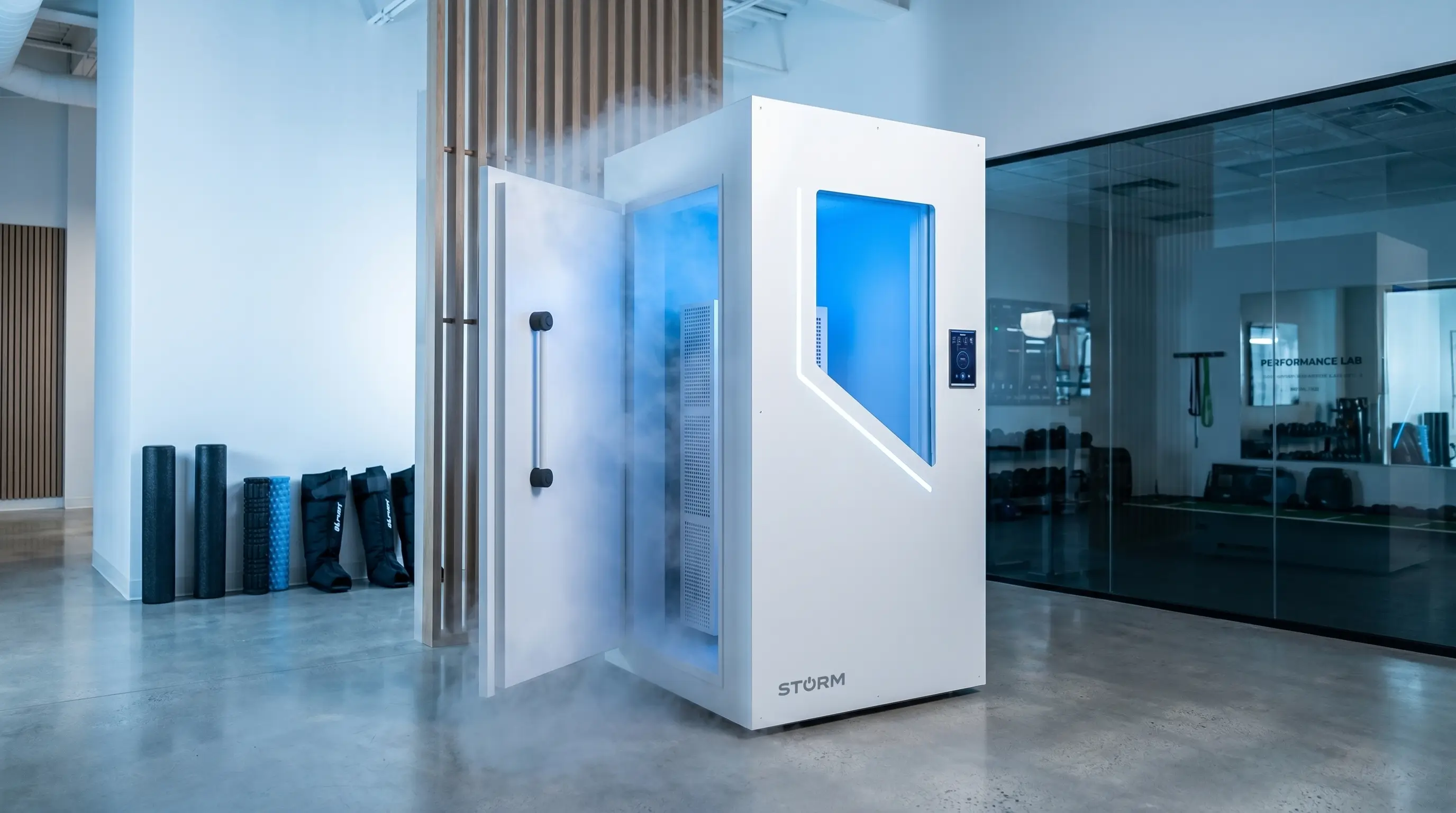
- Recovery and performance studios: in the mix with cryotherapy and strength training.
- Rehab and physio facilities: as a wellness component outside prescribed applications.
- Premium private clients: for villas and penthouses with their own spa area.
Conclusion
HALOCAB is the answer to a clear market development. Guests expect more than a single application. Operators need space-efficient premium solutions. And longevity is increasingly becoming an important differentiator. Five modalities in one cabin, developed and produced in Germany and AI-supported – that goes well beyond a classic red-light bed.
Sources
- Global Wellness Institute: Global Wellness Economy Monitor 2025 (November 2025). https://globalwellnessinstitute.org/industry-research/2025-global-wellness-economy-monitor/
- Barolet D.: Light-Emitting Diodes (LEDs) in Dermatology. Seminars in Cutaneous Medicine and Surgery, 2008;27(4):227–238.

.webp)
.webp)