Opening a Longevity Studio: What Equipment a New Location Really Needs
The longevity market reached its next growth stage in 2024. The Global Wellness Institute puts the wellness market at $6.8 trillion (2024) and names the segment “traditional and complementary medicine” – including photobiomodulation, cryotherapy and biohacking – as high-growth, with a projected increase of 10.8 percent annually through 2029. [1] For founders, franchisors and location investors, that is a rare constellation: a clearly growing market with established premium modalities and moderate barriers to entry.
This guide shows what equipment a modern longevity-studio location really needs – and which devices make sense for which concept size.
The three location sizes in the market
Before the equipment list makes sense, the concept size must be settled. Three types have become established:
- Boutique longevity lab (50–80 m²): compact, urban, high frequency. Central location, two to three application rooms, fast throughput, premium clientele with little time.
- Mid-size recovery studio (150–250 m²): several application rooms, a diagnostics area, a lounge. Serves walk-in clientele and memberships.
- Longevity centre (300+ m²): a full-scale location with all modalities, often combined with coaching, aesthetics and nutritional advice. Higher investment, higher margin, stronger brand impact.
Equipment scales with size: a boutique lab manages with three core modalities, a longevity centre offers six to eight.
Core equipment: the three modules every location needs
Regardless of size, three modalities are the premium standard in 2026:
1. Whole-body cold chamber
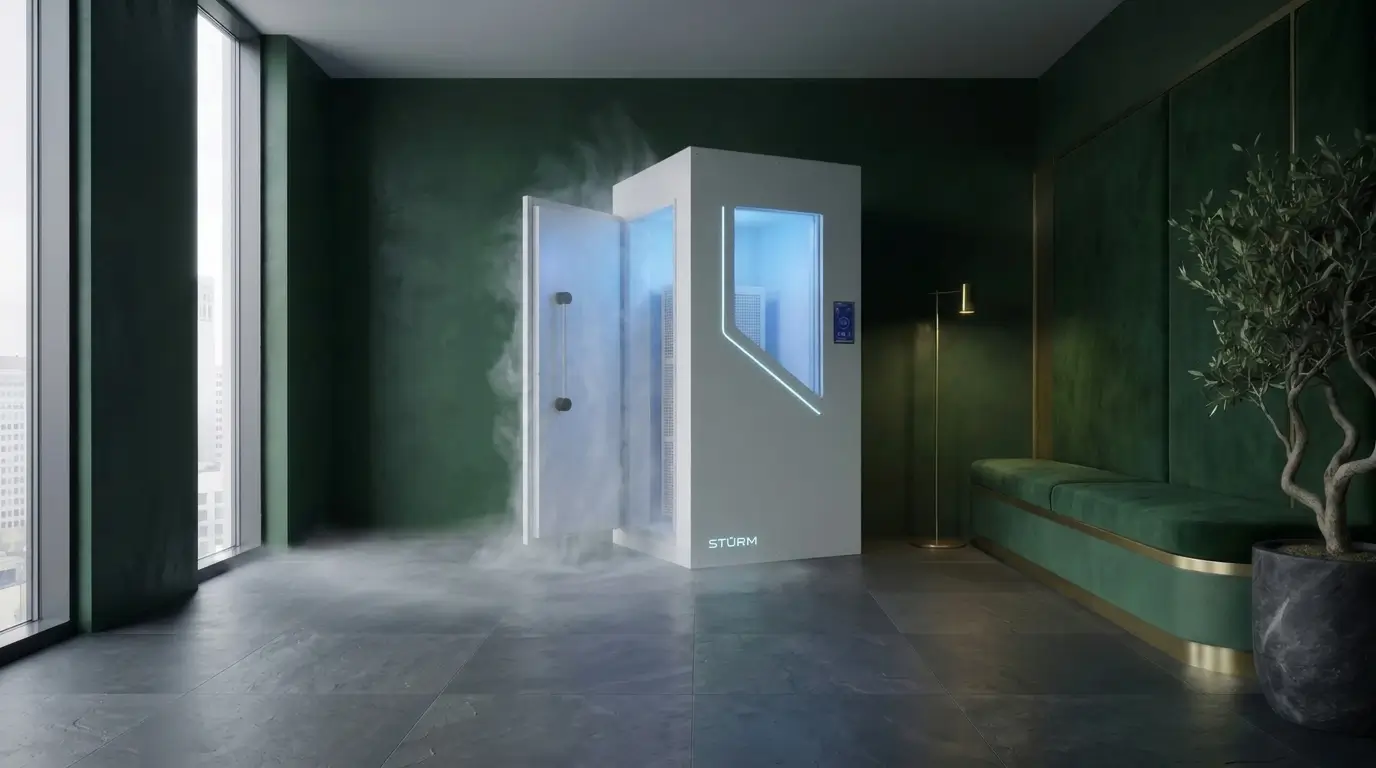
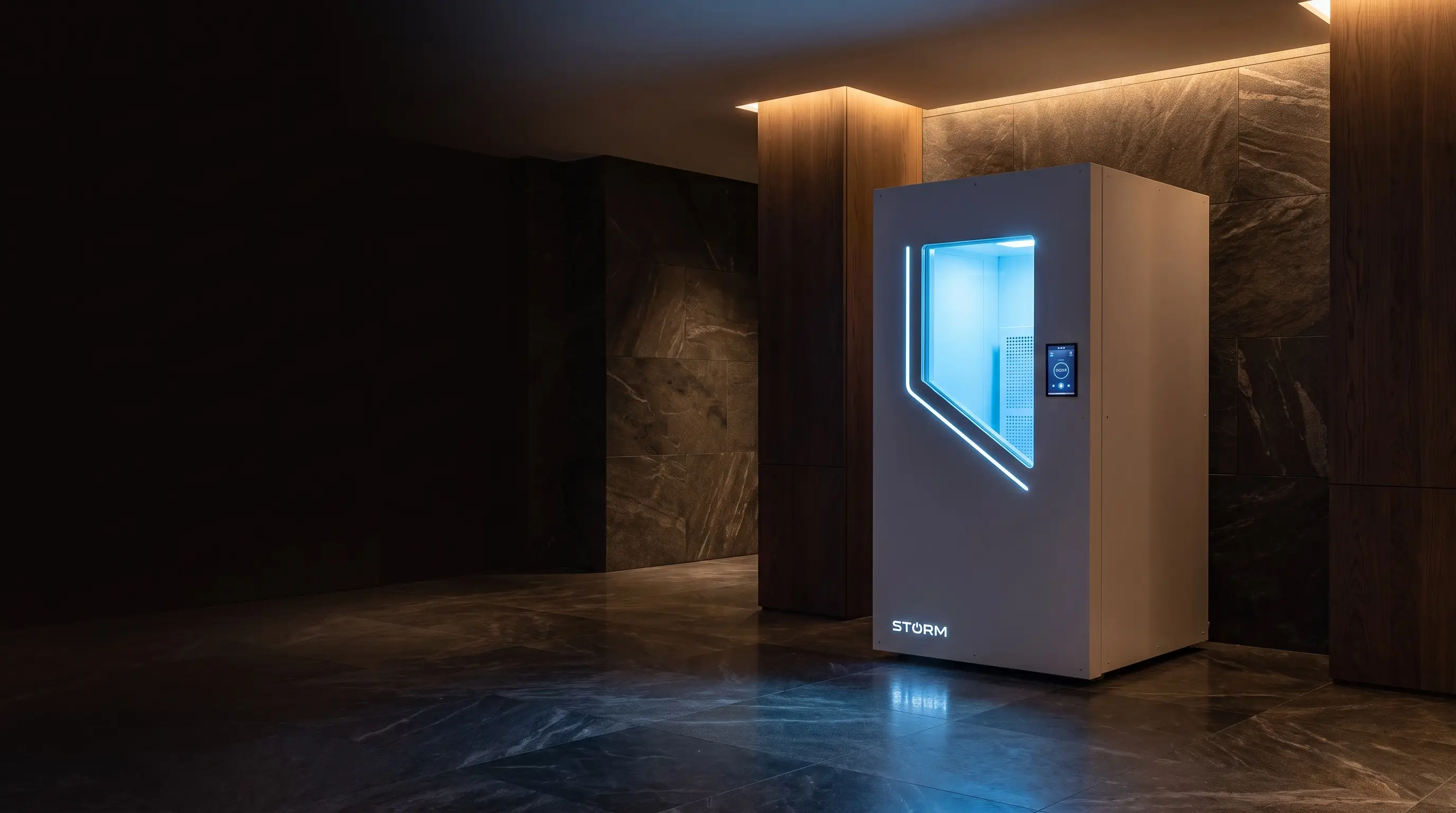
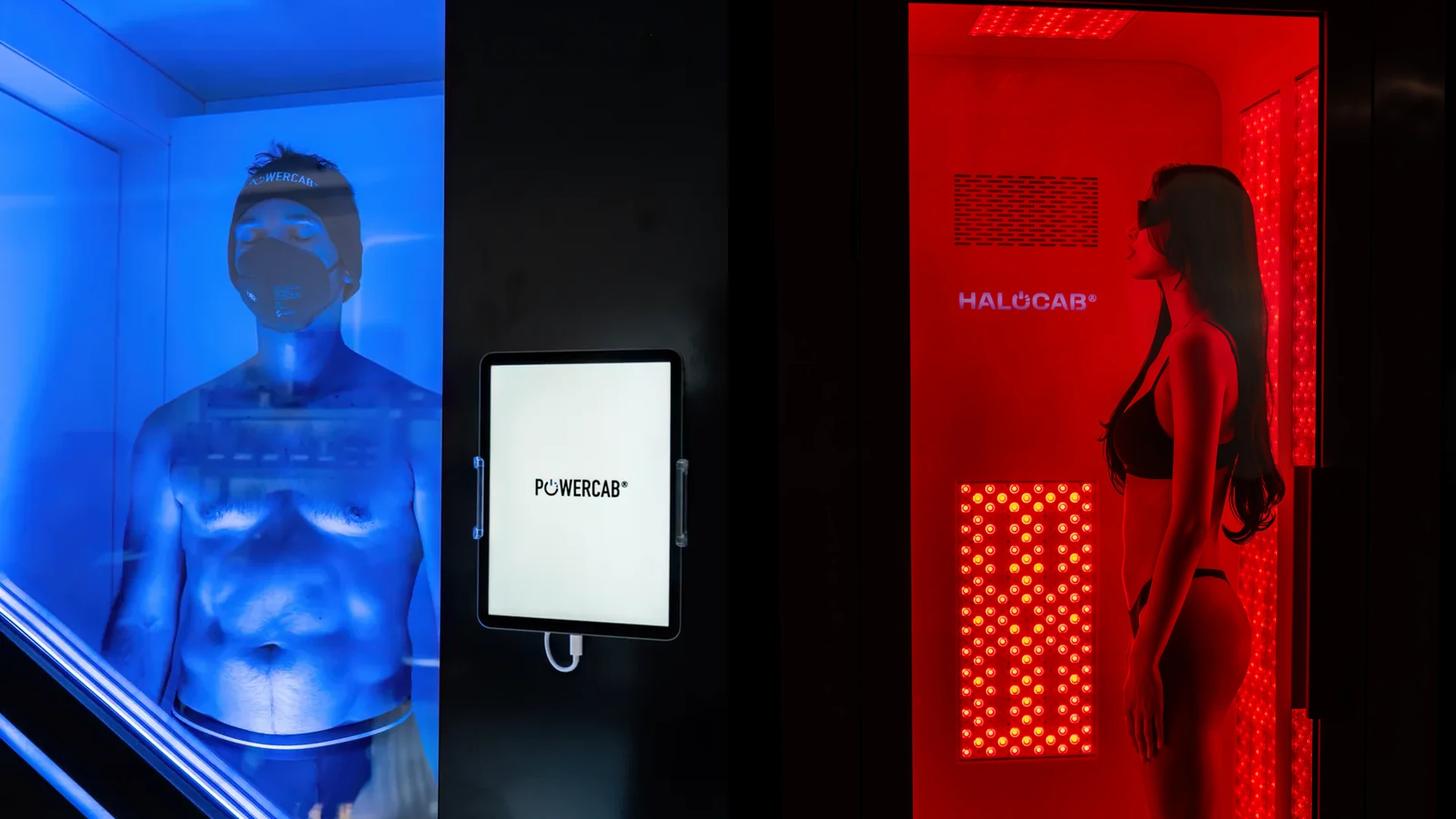
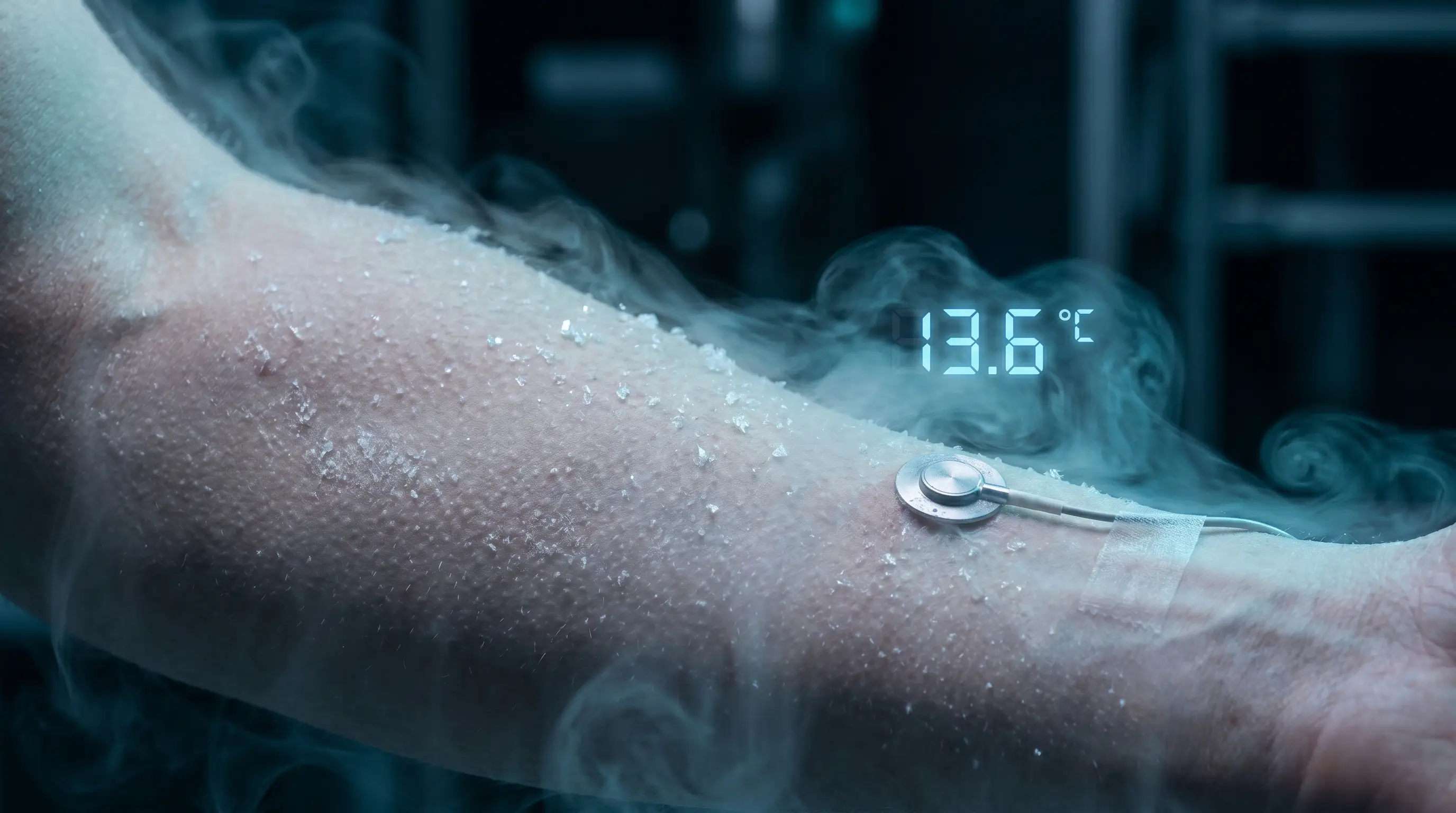
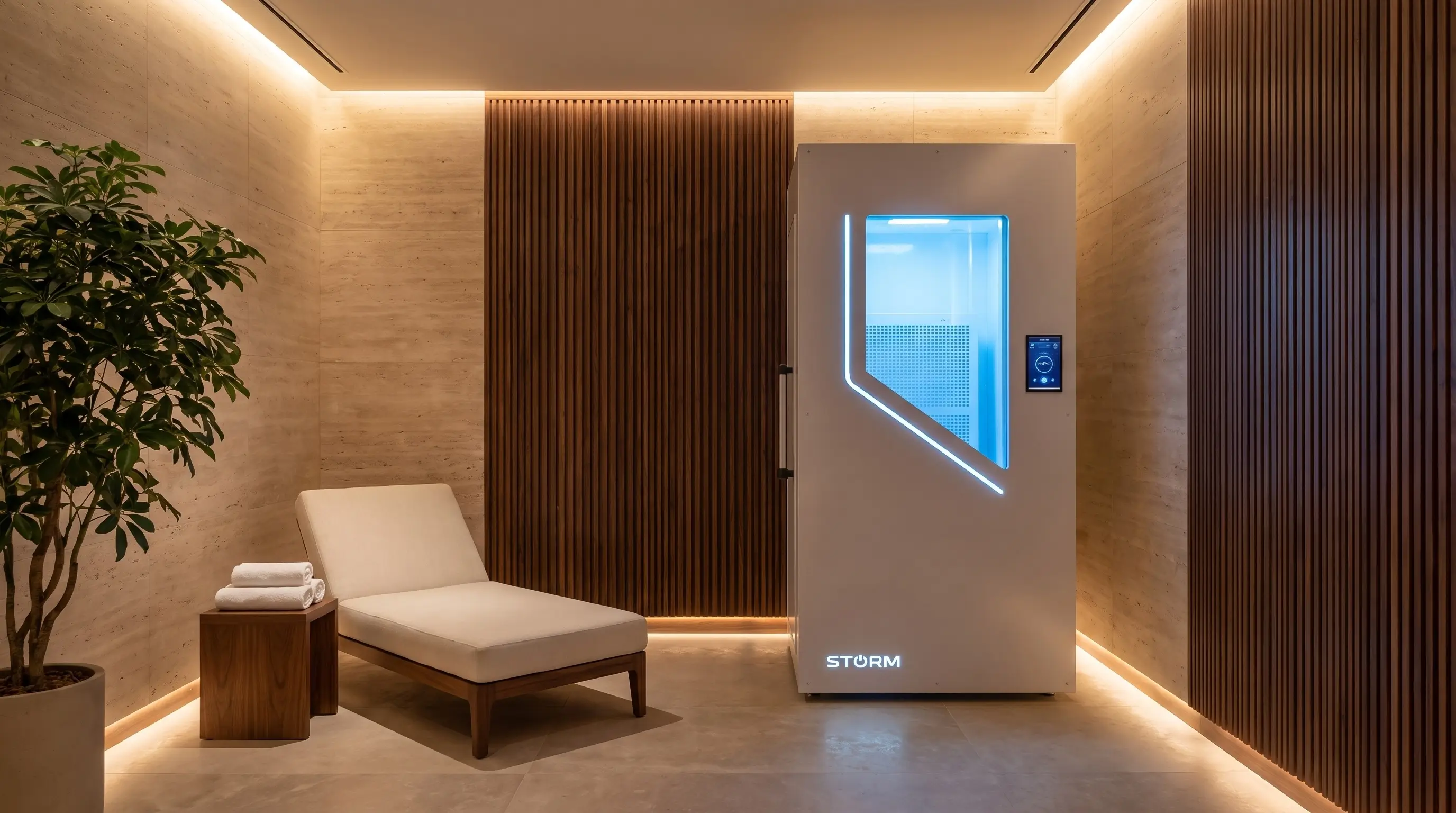
The centrepiece of almost every longevity location. POWERCAB, as the electric premium variant, offers an application temperature down to −110 °C, [2] 2- to 4-minute sessions with high throughput, a true whole-body principle including head exposure, no liquid nitrogen (simple compliance, stable costs) and is made in Berlin. A cold chamber is often the anchor of the business model: high recognition value, clear communication, good utilisation.
2. Photobiomodulation cabin
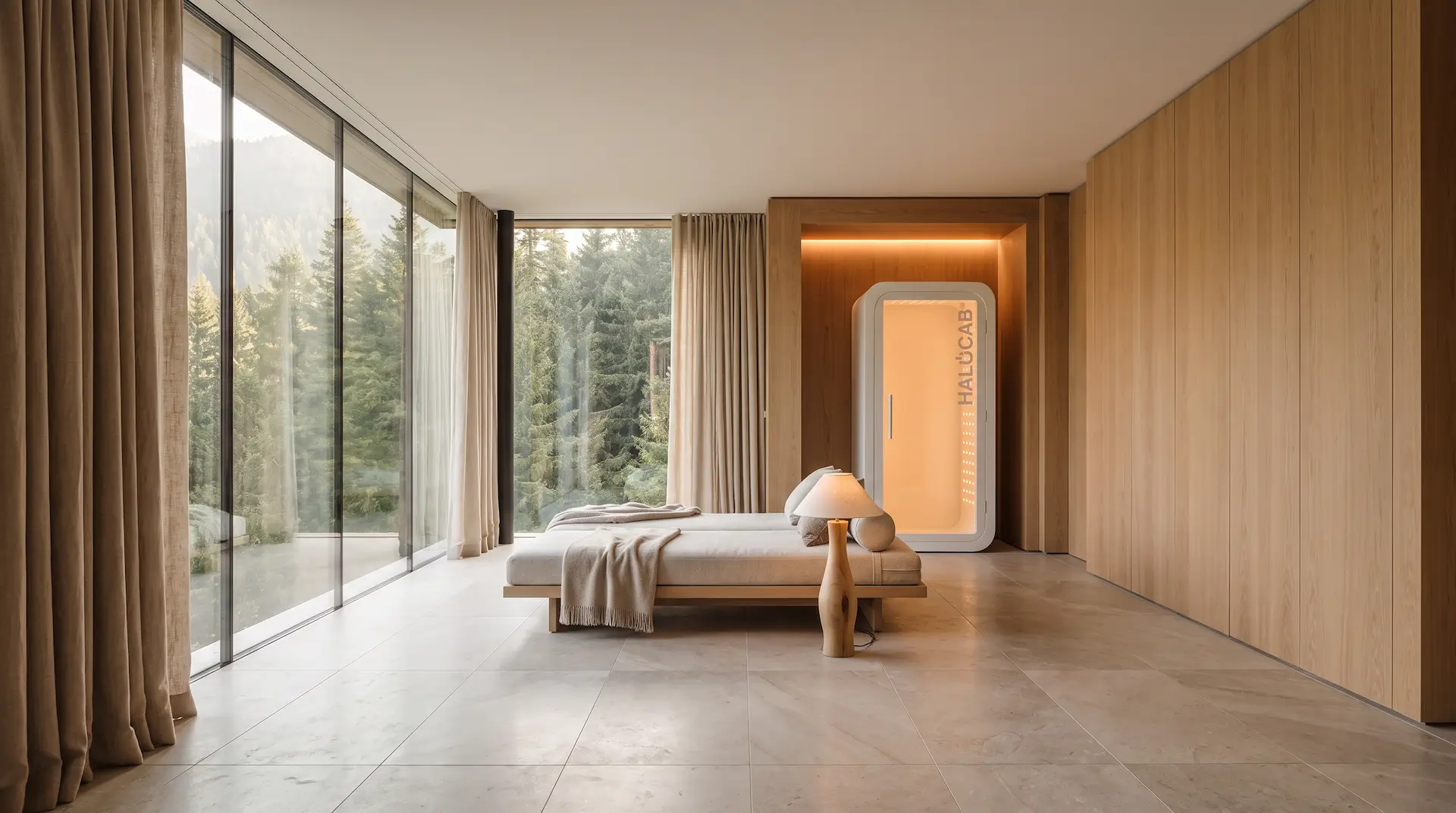
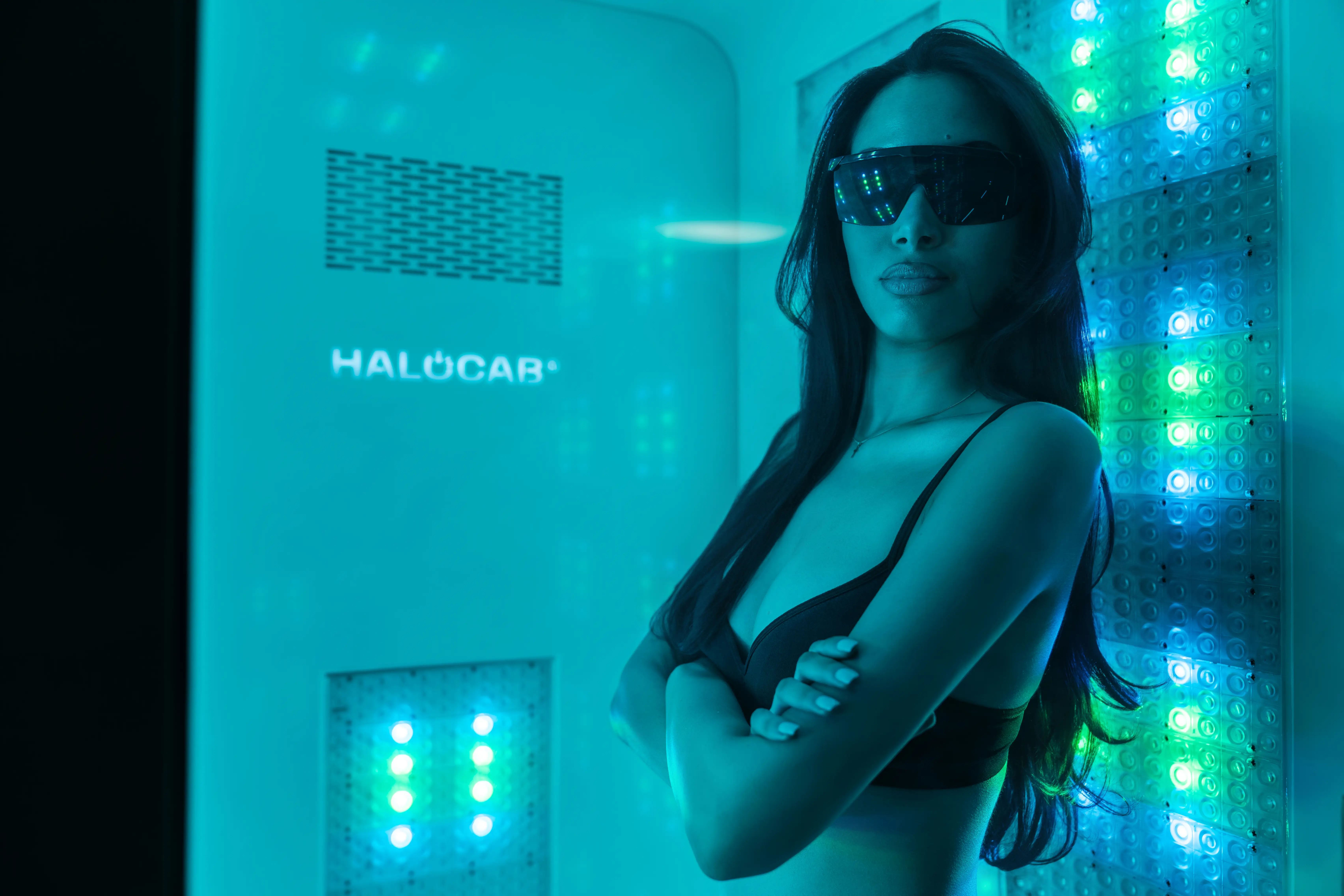
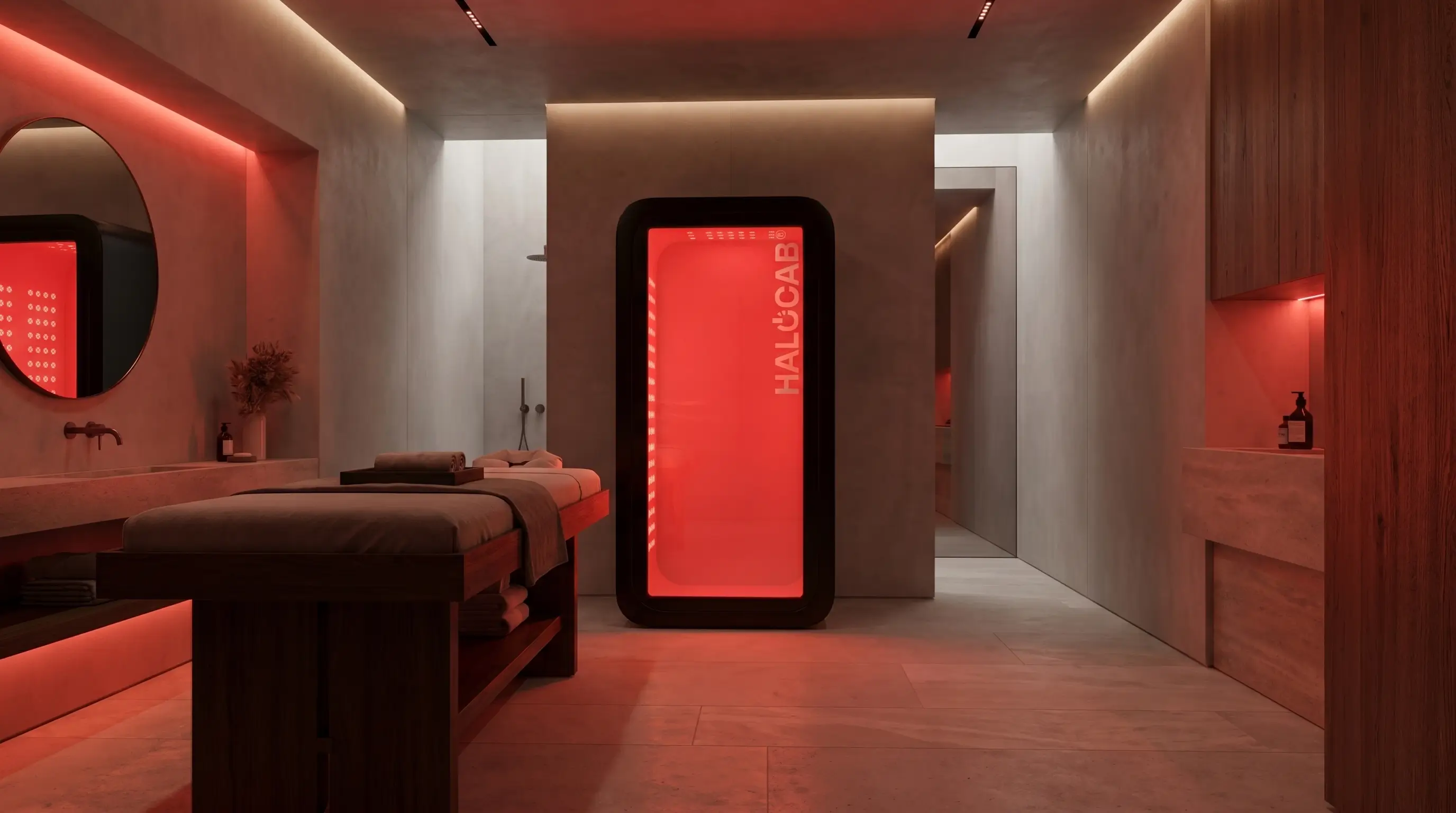
HALOCAB, as a multi-modality system, offers more than a pure red-light cabin: light (480/525/630/660/810/830/850/940/1,060 nm) plus salt inhalation, ionised oxygen, frequencies and aroma. One cabin, five applications – space-efficient and marketable at a premium price point.
3. Magnetic muscle stimulation
ARMSTRONG, as the third module, serves users seeking efficient body applications: around 30 minutes lying down, without sweating, without active movement. The module rounds out the cross-sell portfolio.
These three modules form the standard stack of a modern longevity studio. In this constellation, recovery programmes, longevity packages and performance concepts can be built cleanly.
Optional extensions for larger concepts
At mid-size and centre scales, further modules make sense:
- Compression therapy: lymphatic-drainage devices as a relaxing module after cryo.
- PEMF mats and devices: magnetic-field applications with an established wellness tradition.
- Hyperbaric oxygen (HBOT): a premium module, high investment, clear differentiation.
- Float tanks or sensory-deprivation rooms: a mental-wellness component.
- Body-composition diagnostics: InBody, DEXA or comparable systems for measurable tracking.
- Mental-wellness rooms: meditation, breath coaching, breathwork.
- IV lounge: where legally permissible and wanted by the concept.
Extensions should fit the brand positioning. A technologically precise centre communicates differently from a holistic mind-body concept.
Spatial planning: orders of magnitude for a mid-size location
For a mid-size recovery studio (around 150 m²), realistic investment orders of magnitude:
- Core devices (cold chamber, photobiomodulation cabin, MMS): €150,000–250,000
- Supplementary modules (compression, body composition): €30,000–60,000
- Interior fit-out: €150,000–300,000, depending on location and ambition
- Software and CRM: €10,000–30,000 in the first year
- Opening marketing: €20,000–50,000
In total, then, an initial investment in the order of €360,000 to €690,000 for a fully equipped mid-size location. Boutique labs sit below this, longevity centres considerably above.
Business model and price structure
Three revenue streams carry a well-run studio:
- Single sessions for walk-in clientele: €40–90 per module
- Memberships for regulars: €150–400 per month
- Packages and programmes over several weeks: €600–2,500 depending on components
In the premium segment, B2B partnerships are added: local sports clubs, performance coaches and physio practices that recommend cryo and PBM modules to their clients.
Staff: the often underestimated topic
Devices alone do not make a studio. A modern longevity studio needs these profiles:
- Recovery coach: the central figure for briefing, guidance and cross-sell.
- Wellness manager: day-to-day operations, bookings, memberships.
- Studio marketing: content, social media, local partnerships.
- Hygiene and cleaning: also outsourceable, but to be clearly regulated.
Location selection
- Visibility: a ground floor or first floor in a footfall position beats hidden locations – even at higher rent.
- Proximity to target groups: performance studios, yoga studios and premium gyms nearby are not competition but cross-traffic.
- Access: customers often book sessions directly before or after work. Parking or public transport is a purchase criterion.
Three mistakes that are frequently made
- Too many devices too early: more than three core modules at opening dilute brand and staff. Better to start focused and add later.
- Wrong device quality: cheap Asian imports pay off short-term but cost more long-term in service and lifespan.
- Marketing only after opening: three to six months of lead time is mandatory.
Conclusion
Opening a longevity studio is a fully calculated business model in 2026. The market data supports the investment, the modalities are established, the target groups are clear. Anyone who builds a clean three-module core with POWERCAB, HALOCAB and ARMSTRONG, chooses German premium quality and pursues a clear brand positioning has the essential prerequisites for a successful location.
Discover the POWERCAB cold chamber · Discover the HALOCAB longevity cabin · Distributor and studio partnerships
Sources
- Global Wellness Institute: Global Wellness Economy Monitor 2025 (November 2025). https://globalwellnessinstitute.org/industry-research/2025-global-wellness-economy-monitor/
- Bouzigon R. et al.: Cryostimulation for Post-exercise Recovery in Athletes: A Consensus and Position Paper. Frontiers in Sports and Active Living, 2021;3:688828. https://doi.org/10.3389/fspor.2021.688828